Memory of Fish: Debunking Myths and Exploring Remarkable Cognitive Abilities
Introduction: Do Fish Really Forget Everything?
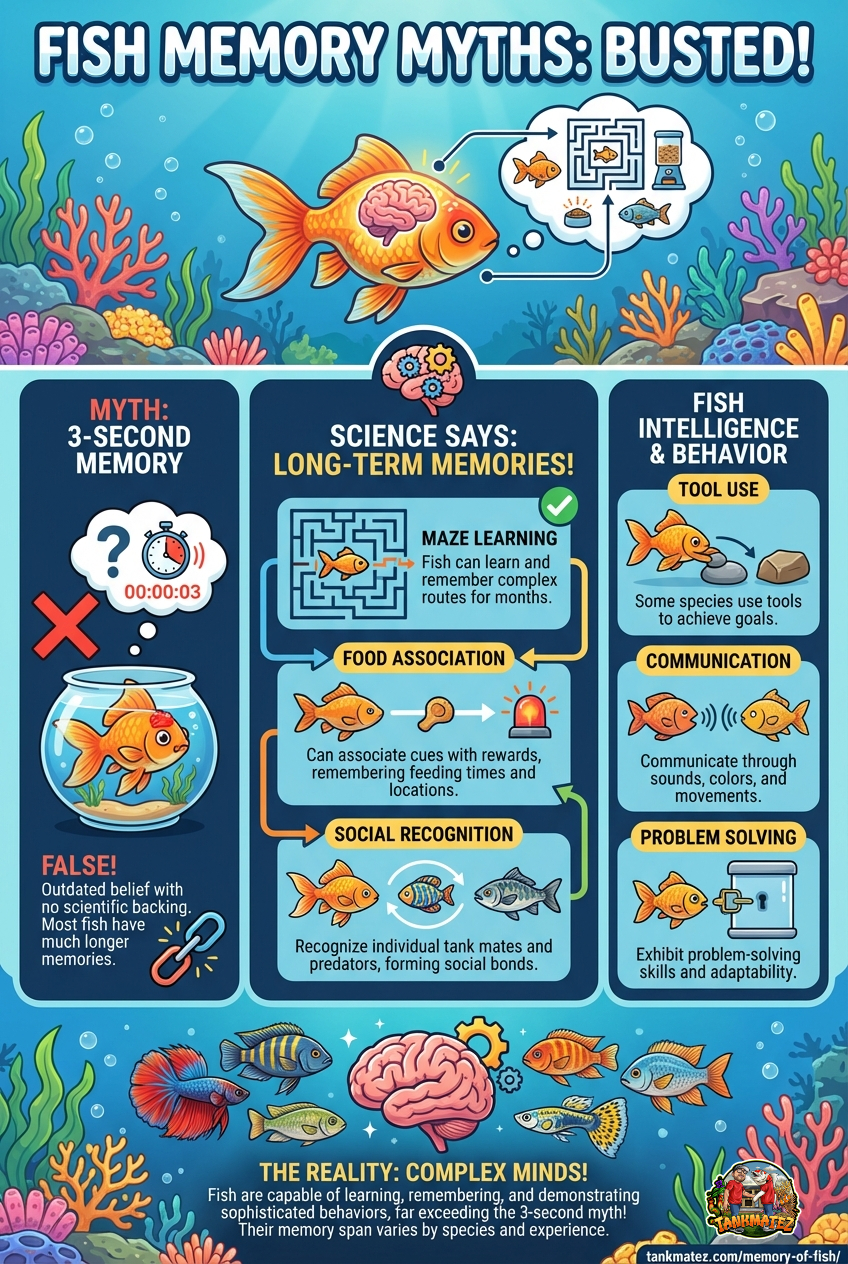
Many people have heard the saying that a goldfish has a three‑second memory. This phrase is often used to excuse tiny bowls and barren tanks because “they won’t remember anyway.”
As responsible aquarists, we should ask more precise questions: what is the memory of fish actually like? and how can we provide environments that support their cognitive needs?
In this comprehensive blog post, we delve into peer‑reviewed studies, debunk the myth of the three‑second memory, and explore what modern science tells us about the memory of fish.
The Science Behind the Memory of Fish▼
How Did the Three‑Second Memory Myth Begin?
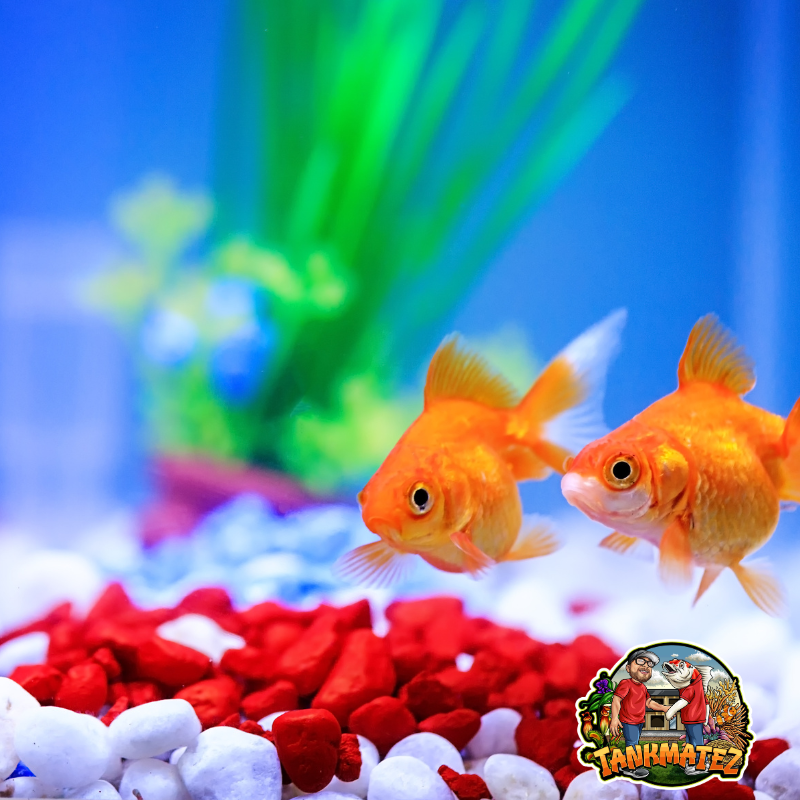
The misconception that fish forget everything almost instantly likely arose from their small brains and the widespread use of bowls.
Behavioral ecologists such as Adelaide Sibeaux note that public perception is shaped by the way fish are kept; keeping them in tiny glass bowls makes people assume they must be less intelligent.
The myth is persistent because it relieves owners of guilt when housing fish in cramped conditions.
In reality, brain size does not directly correlate with intelligence, and fish brains contain specialized structures analogous to the hippocampus and amygdala.
What Brain Structures Support Memory in Fish?
A key reason people doubt the memory of fish is that they lack a mammalian hippocampus. However, neuroscientists have identified a region in fish called the lateral pallium that serves similar functions.
Research highlighted in IFLScience explains that although fish do not possess a hippocampus, the lateral pallium forms connections between events and experiences and shares evolutionary origins with mammalian brain regions responsible for learning and emotions.
The American Museum of Natural History adds that despite lacking a cortex and hippocampus, fish still rely on spatial cognition and have brain areas analogous to the hippocampus, enabling them to create cognitive maps.
These findings suggest that the memory of fish is underpinned by specialized structures rather than the absence of them.
Can Goldfish Learn and Remember Spatial Tasks?
Experiments on goldfish provide some of the clearest evidence of long‑term memory.
In a series of studies by a Young Naturalist Award winner, goldfish were trained to navigate a maze to find a food reward. When tested later, they successfully remembered the maze even when obstacles were rotated by 180 degrees, indicating that they could recall spatial tasks and adapt to changes.
Similar research from the American Museum of Natural History found that goldfish learned quickly and remembered the location of food in a maze for at least one month.
Another experiment concluded that goldfish can recall the route to food after several months without training.
What does this tell us? Goldfish use both allocentric (landmark‑based) cues and egocentric (route‑based) strategies. Researchers discovered that their memory was not limited to a few seconds but could last weeks or months. In fact, experiments where parts of the goldfish brain were temporarily disabled showed that spatial cognition depended on the lateral telencephalon, while rote response strategies relied on other areas.
These results demonstrate that the memory of fish involves multiple learning systems, enabling them to switch between strategies just like mammals.
How Long Can Fish Remember? Evidence from Other Species
African Cichlids
Canadian scientists studied African cichlids to test the duration of their memory.
Fish were trained to enter a specific area of an aquarium to receive food. After three days of training, they were given a twelve‑day break.
When reintroduced, the cichlids returned to the feeding zone, showing they remembered the association after nearly two weeks.
The cichlids even reversed the learned association when researchers changed the feeding location.
Wild Cleaner Fish
In the wild, memory often serves survival.
A 2019 study on cleaner fish (Labroides dimidiatus) documented that after being caught in a barrier net and released, about 50% of the fish displayed a hiding response when the net was presented again eleven months later. This suggests that a single negative experience can be retained for almost a year.
A review of long‑term memory in fish summarizes other examples: rainbow trout remembered to press a trigger for food three months after training; gobies returned to home pools forty days after being moved; anemonefish recognized their neighborhood after six months; and crimson spotted rainbowfish recalled an escape strategy learned eleven months earlier.
Red Sea Bream
Not all memories persist equally. In juvenile red sea bream, scientists tested both appetitive and aversive learning.
The fish retained appetitive memories (where a reward was given) for roughly 30 days, although some individuals remembered for 60 days, while aversive memories (punishment‑based) lasted only a day.
This variability suggests that memory duration depends on the type of learning and individual differences.
Social Recognition in Fish
Fish not only remember places and events but also individuals.
An experiment in the Mediterranean Sea showed that wild seabream learned to follow a particular diver who fed them. After 12 days, the fish consistently followed the same diver and ignored another diver, indicating that they recognized individual humans.
Researchers observed that fish tested both divers, learned which one provided food, and formed associations accordingly. This ability to recognize humans implies that the memory of fish encompasses social learning and individual recognition.
Do Fish Use Tools or Plan Ahead?
Contrary to the stereotype that fish are simple reflex machines, studies reveal sophisticated behaviors.
The Royal Society of Biology notes that many fish perform complex navigation based on mental maps; some remember previous fights to judge opponents; others use rocks to open shells or discover new tools.
Cooperative behaviors such as group hunting or predator inspection also rely on memory and communication.
These examples show that fish can learn from experiences, remember them, and apply this knowledge in new contexts.
How Does Memory Benefit Fish in the Wild?
Memory gives fish evolutionary advantages. It helps them remember where food is located, avoid predators, and coordinate social behaviors.
Scientists studying African cichlids note that remembering safe feeding zones may confer survival benefits.
Similarly, long‑term memory of aversive events prevents repeated capture.
In the case of cleaner fish, remembering a negative experience allowed them to avoid nets a year later, demonstrating adaptive memory that increases survival odds.
Practical Tips: Supporting Cognitive Health in Your Aquarium
For aquarium hobbyists at tankmatez.com, understanding the memory of fish is essential for welfare.
Here are evidence‑based recommendations:
- Provide Environmental Enrichment. Offer structures, plants, and hiding places that fish can explore. Diverse environments encourage spatial learning and reduce stress.
- Use Larger Tanks with Visual Landmarks. Fish rely on allocentric cues such as decorations and external features. Avoid keeping fish in small round bowls; their ability to navigate and form maps is limited in such environments.
- Train and Interact with Your Fish. Goldfish and other species can learn tricks and respond to cues. Use positive reinforcement—reward desired behaviors with food or treats. Research shows that goldfish can learn mazes and remember tasks for months.
- Feed Consistently and Vary the Diet. Feeding at regular times helps fish develop routines. Variation in diet stimulates cognitive engagement and may improve memory retention.
- Avoid Stressful Handling. Since aversive experiences can create long‑lasting fear memories, handle fish gently, minimize netting, and acclimate them slowly when moving tanks.
- Consider Social Needs. Many fish recognize conspecifics and even humans. Provide appropriate group sizes and watch for social interactions.
Why It Matters: Ethics, Welfare, and the Future
Understanding the memory of fish has ethical implications.
Fish are often excluded from animal welfare regulations, yet they feel pain and remember negative experiences. Research shows that they have structures supporting emotions and learning.
As society reevaluates how we treat animals, acknowledging fish cognition supports more humane practices in aquaculture and the pet trade.
Moreover, studying fish memory helps scientists explore the evolution of learning and memory.
The lateral pallium and telencephalon in fish may reveal how complex brains evolved.
Goldfish experiments could even inform research into human memory and diseases such as Alzheimer’s.
Conclusion: Memory of Fish Is Far From Forgetful
The myth of the three‑second memory has been thoroughly debunked. Evidence from goldfish, cichlids, sea bream, and cleaner fish shows that the memory of fish can last days, weeks, months, and even nearly a year.
Fish learn spatial tasks, remember individual humans, and adapt their behavior based on past experiences.
As aquarists and animal lovers, we have a responsibility to provide environments that respect their cognitive abilities.
Next time someone tells you that a fish will forget in three seconds, you can reply with confidence—fish memories are far more impressive and deserve our respect.
What is the memory of goldfish?
The memory of goldfish is far longer than the popular three-second myth. Scientific studies show goldfish can remember routes, feeding locations, and learned behaviors for weeks or even months.
How long is a fish memory?
Fish memory can last from several days to many months, depending on the species and the type of experience. Some fish have demonstrated memory retention for up to 11 months after a single event.
Do fish have memory?
Yes, fish absolutely have memory. Research shows they can learn tasks, recognize locations, remember social interactions, and even identify individual humans.
Is the memory of a goldfish good?
Yes, the memory of a goldfish is surprisingly good. Goldfish can learn mazes, associate sounds or visual cues with food, and remember those lessons long after training ends.
If Fish Remember Everything… Why Are You Still Using a Net?
Now that you know the truth about the memory of fish, it’s time to rethink how you handle them.
Traditional nets create stress your fish won’t forget.
The TankMatez Bubble Fish Trap uses their natural feeding instincts for a safer, low-stress capture experience.
Protect their memory and their well-being with a smarter solution.

TankMatez Magnetic Bubble Fish Trap
The TankMatez Magnetic Bubble Fish Trap is an innovative solution for every aquarium hobbyist’s age-old problem – the challenge of catching fish with a net. Instead of the usual frantic chase, which often ends up causing undue stress for the fish and potential harm to corals, this device provides a smooth, anxiety-free method to ensnare your aquatic friends. Click Here to see the setup video.