Understanding Fish Characteristics and Personalities: A Deep Dive into the Aquatic World
Introduction
Fish are more than just shimmering scales and graceful swimmers. They represent half of all vertebrate species and display a dazzling array of forms, behaviors and personality traits.
Our fascination with fish often begins with their basic anatomy, yet modern research reveals that individual fish also have consistent behavioral differences comparable to “personalities.”
In this guide, we explore fish characteristics, dive into fish personalities, and consider what shapes these traits in our aquatic friends.
Understanding Fish Characteristics and Behavior ▼
What Are the Fundamental Fish Characteristics?
When we talk about fish characteristics, we usually start with anatomy.
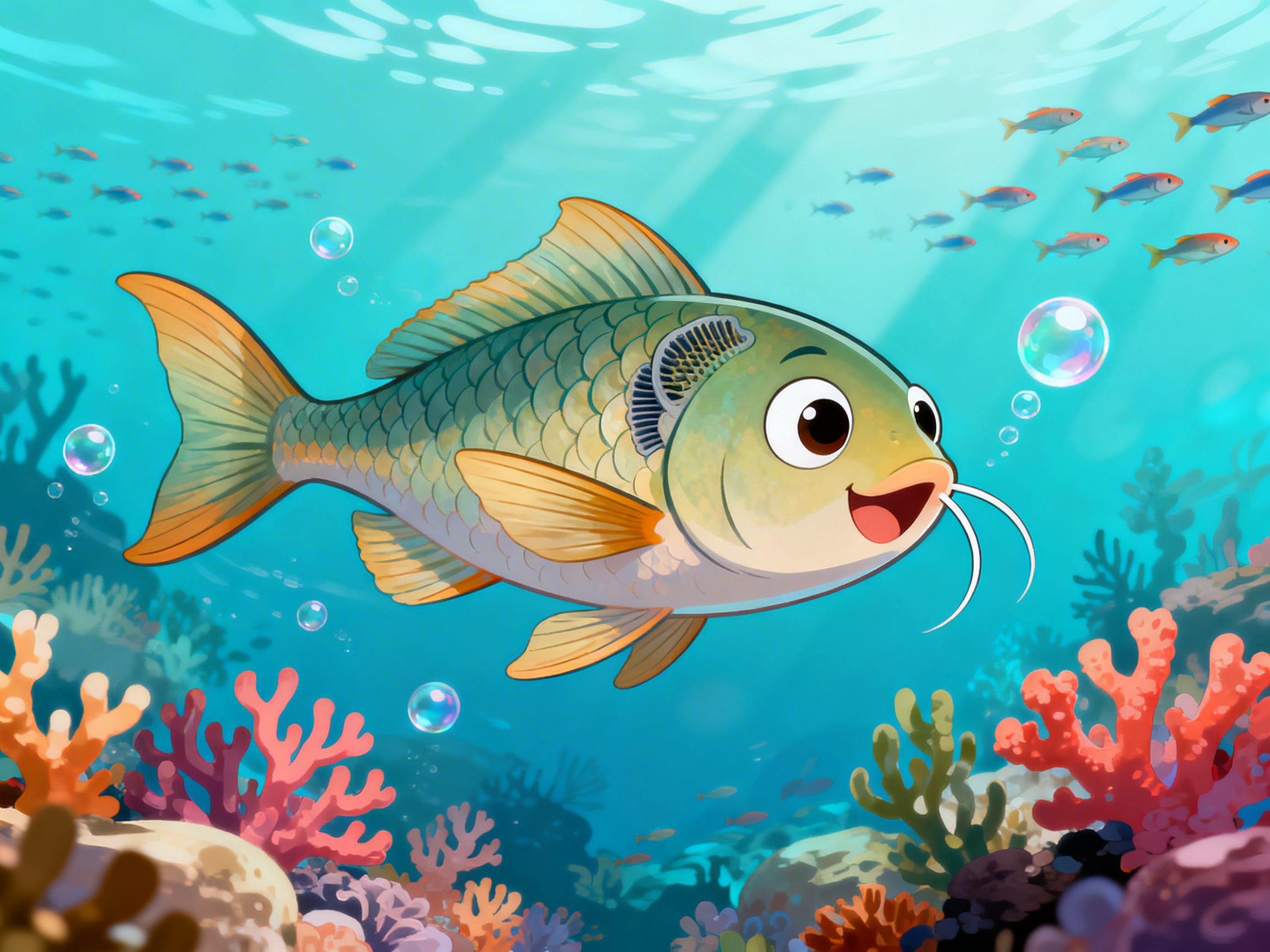
Fish are vertebrates with a backbone and are typically cold‑blooded animals that live in water. They possess fins and most have scales, though some species like catfish lack them.
External features include eyes for sight, nares (nostrils) for smelling, a mouth for feeding, and the operculum (a bony flap protecting the gills).
Each fin serves a purpose: pectoral fins allow abrupt side‑to‑side movements and braking, pelvic and anal fins stabilize the fish, and the caudal (tail) fin provides propulsion.
Some species even possess an adipose fin, a small fleshy fin between the dorsal and caudal fins, whose purpose is not fully understood.
Internally, fish breathe through gills, feathery structures that extract dissolved oxygen as water flows through the mouth and over the gills.
Many fish also have a swim bladder, which can inflate or deflate to control buoyancy and maintain position in the water column.
Fish senses extend beyond vision and smell; they have internal ears (otoliths) to detect sound in water and a lateral line (a series of fluid‑filled canals along the body that senses vibrations and movements around them).
Some species, like catfish and sturgeon, use barbels, whisker‑like sensory organs, to locate prey. These characteristics help fish navigate complex aquatic environments and avoid predators.
How Do Body Shapes Influence Fish Lifestyles?
Fish come in a remarkable variety of shapes, each adapted to their habitat and way of life.
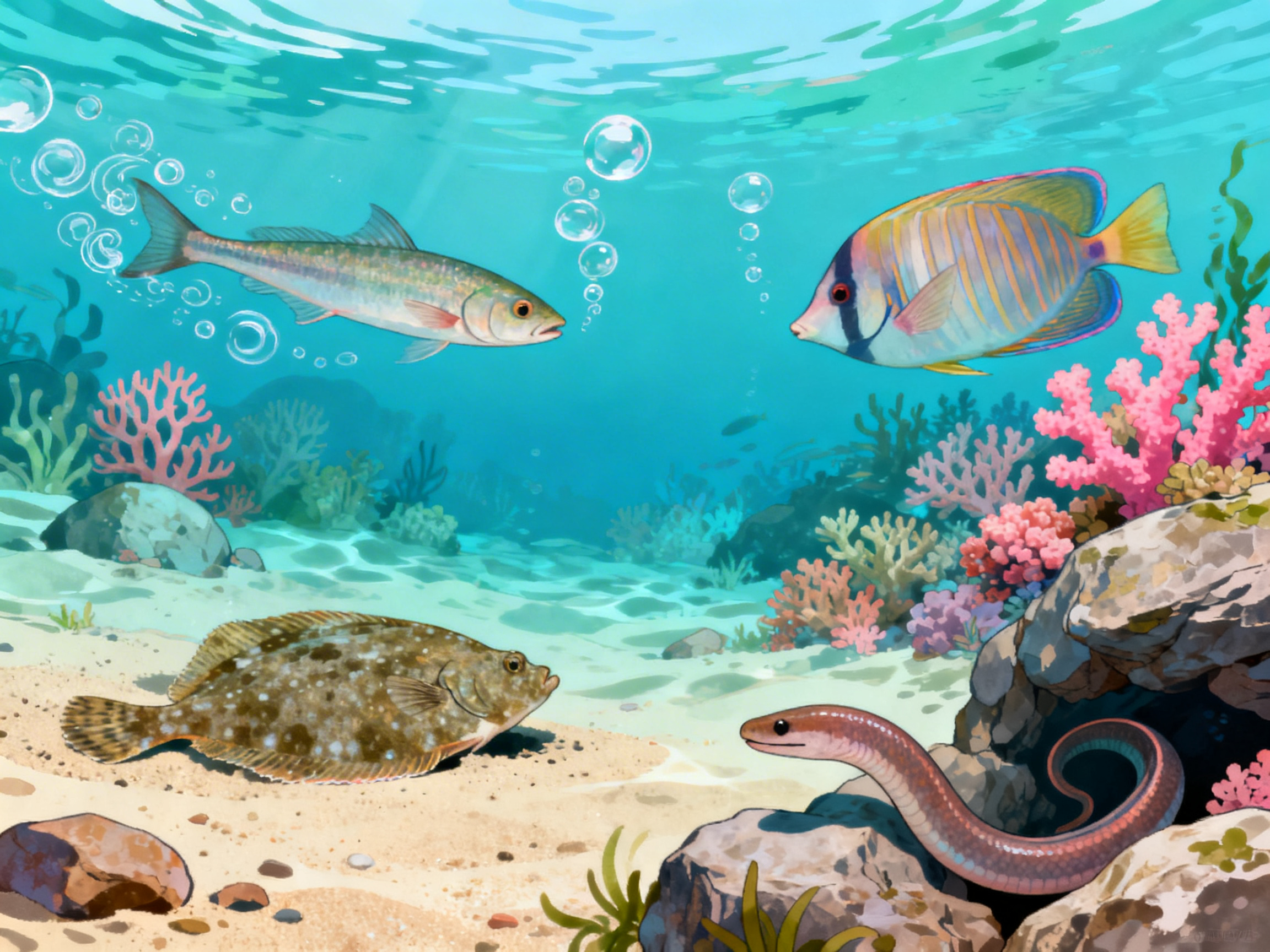
Biologists describe body forms with terms like fusiform (torpedo‑shaped), compressiform (flattened side‑to‑side), depressiform (flattened top‑to‑bottom) and anguilliform (eel‑like).
A fusiform shape, like that of perch, reduces friction for fast swimmers and suits open water.
A compressiform body, such as angelfish, allows quick maneuvering around coral reefs, while depressiform fish like flounder are adapted for life on or near the seafloor.
Anguilliform fish such as eels use their flexible bodies to navigate crevasses and burrow.
These morphological fish characteristics are not merely aesthetic; they influence feeding strategies, habitat preference and predator avoidance.
For instance, streamlined predators like tunas and marlins rely on speed, whereas laterally compressed fish often inhabit environments where agility matters more than speed.
What Are the Major Groups of Fish and Their Distinctive Traits?
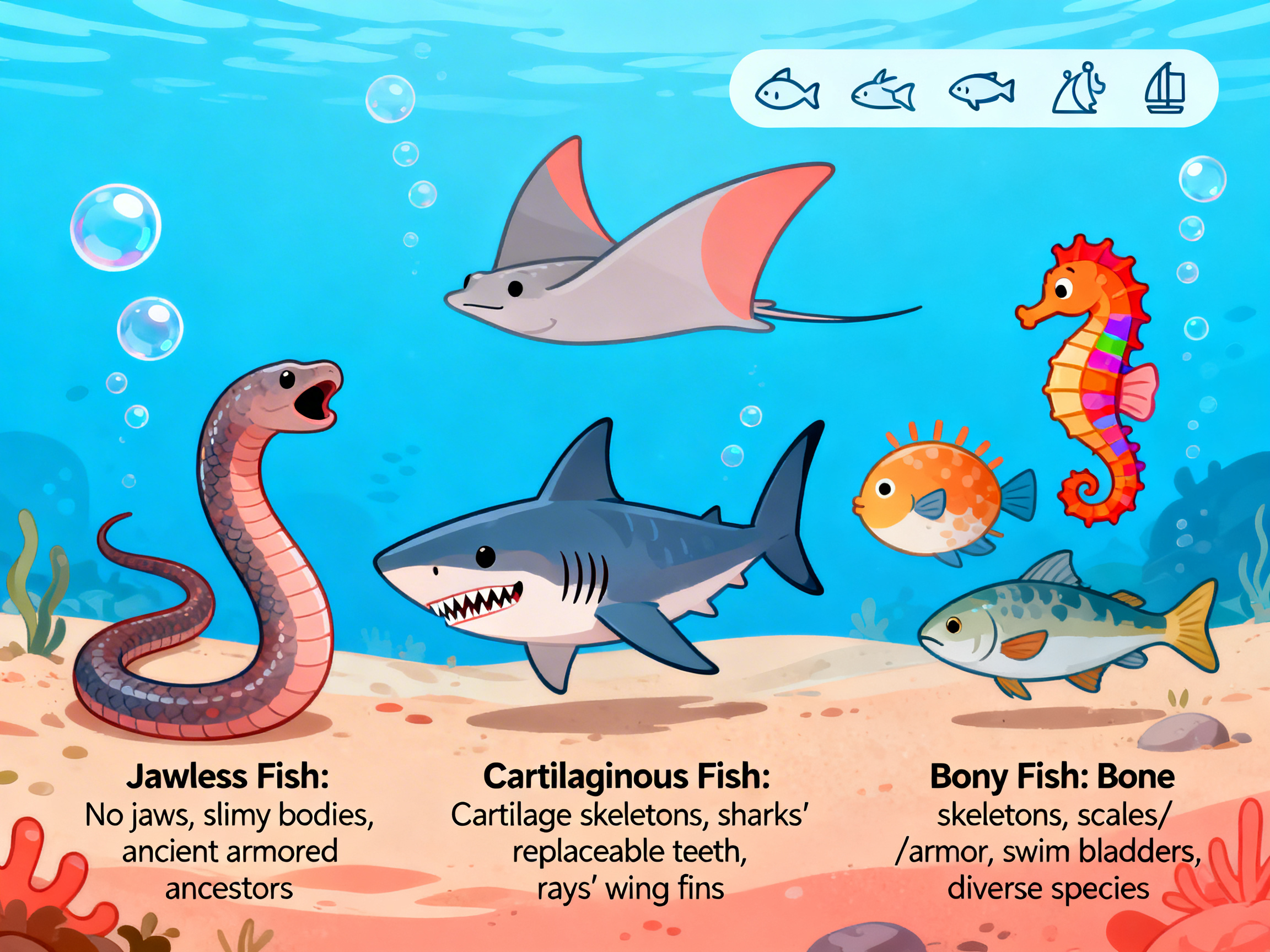
Jawless Fish (Superclass Agnatha)
The most primitive living fishes belong to the superclass Agnatha. They lack jaws, and their mouths resemble holes without movable parts.
The only surviving representatives are lampreys and hagfishes, which have slimy, eel‑like bodies and lack scales.
Fossil evidence shows that ancient agnathans were heavily armored, lacked paired fins, and used large gills both for respiration and filter‑feeding. Modern lampreys and hagfishes often live as parasites or scavengers on other fish.
Cartilaginous Fish (Class Chondrichthyes)
Sharks, rays and chimaeras make up the class Chondrichthyes.
Their skeletons are composed of cartilage rather than bone. Sharks possess multiple rows of teeth that are continually replaced, and males have claspers (specialized appendages used to transfer sperm during internal fertilization.)
Rays differ from sharks by having enlarged pectoral fins that function like wings; they swim using wave‑like motions of these fins and have mouths on the underside of their bodies.
Chimaeras have soft bodies, no scales and beak‑like teeth, and many species inhabit deep ocean floors.
Bony Fish (Superclass Osteichthyes)
Bony fish (Osteichthyes) are the most diverse group of vertebrates. They possess jaws and skeletons made of bone. Many have scales or armor plating, though some species like catfish lack any covering.
Bony fish typically have two sets of paired fins and may have a swim bladder (an out‑pouching of the gut used for buoyancy).
The group includes lungfishes (Sarcopterygii) and the vast radiation of ray‑finned fishes (Actinopterygii), encompassing everything from tiny seahorses to huge ocean sunfish.
These evolutionary divisions illustrate the breadth of fish characteristics across taxa.
Do Fish Have Personalities?
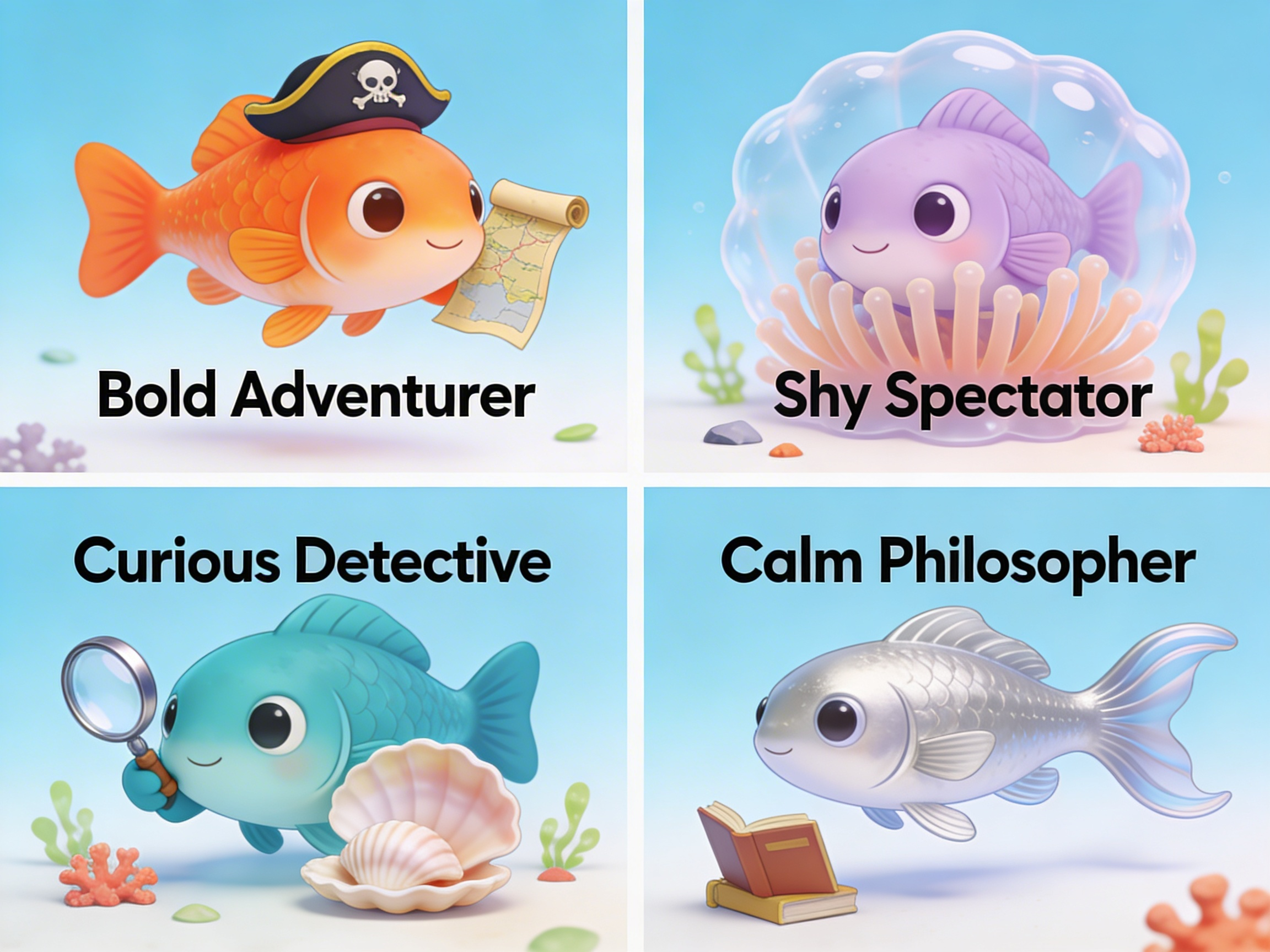
At first glance, fish might seem simple creatures governed by instinct. Yet behavioral ecologists have long suspected that individual fish exhibit consistent differences in behavior—analogous to personality.
In a 2017 interview at the Leibniz Institute of Freshwater Ecology, researcher Kate L. Laskowski defined a fish personality as the predictability of an individual’s behavior across similar situations.
She noted that fish show varying degrees of activity, aggressiveness and responses to new environments or risky situations.
Early social experiences play a role: experiments with clonal mollies found that individuals repeatedly victorious in dominance encounters remained dominant later in life. Those that sometimes won and sometimes lost tended to attack bold winners but often became “losers” when challenged by more opportunistic fish. These observations suggest that personality traits of fish can be shaped by experience and are consistent over time.
The notion of fish personality gained wider attention with research on convict cichlids. A 2022 study at Brigham Young University assessed dominance behavior by placing fish along a bold–shy spectrum.
Boldness describes a fish’s propensity to explore, feed, mate and escape with confidence, whereas shyness is the opposite.
Researchers tested fish using behavioral assays such as time to feed, emergence into new areas, exploration of novel objects and mirror interactions, assigning higher boldness scores to fish that performed these actions quickly. This work illuminated how personality influences social hierarchies; large or dominant cichlids tended to assert themselves through mouth pushes and chases, while subordinate individuals retreated or hid.
Studies on other species reinforce the idea of individual personality.
Scientists from the University of Exeter examined Trinidadian guppies and found that individuals employed diverse strategies when placed in unfamiliar tanks. Some hid, others attempted to escape and others explored cautiously, yet each fish’s behavioral differences remained consistent across stressful and less stressful situations.
This complexity challenges the notion that fish can be ranked on a simple bold–shy axis; instead, multiple behavioral dimensions appear to define fish personalities.
How Are Personality Traits of Fish Measured?
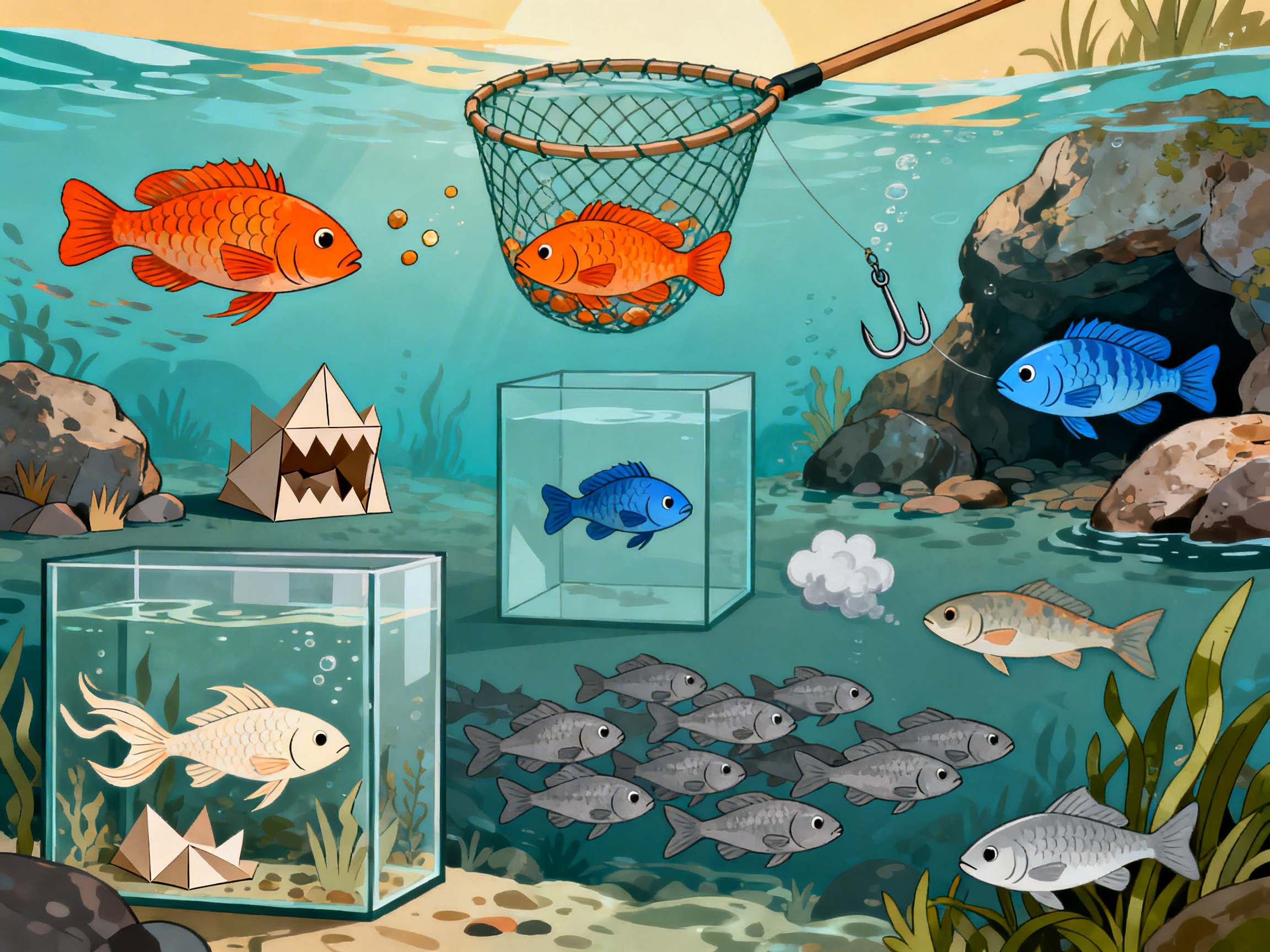
Researchers have developed various assays to quantify personality traits of fish.
The convict cichlid study used feeding time and exploration of new spaces as proxies for boldness.
In bluegill sunfish, scientists used a capture technique to gauge personality. A Carleton University summary of a 2011 study reported that angling (hook fishing) tended to capture timid fish near refuge areas, whereas seine nets in open water captured bolder, risk‑taking fish.
When researchers later angled fish that had been seined and released into an experimental pond, bold individuals were most frequently caught in open areas. This finding suggests that the capture method can be biased by fish personality, with ecological and evolutionary implications.
Another approach focuses on stress responses. In the guppy study, mild stress was induced by placing fish in a novel tank, while higher stress levels came from adding models of predatory birds or fish. Even though all fish became more cautious in stressful situations, each maintained its relative behavioral rank, meaning that inherently bold individuals remained bolder than shy ones. Such assays reveal stable coping styles across different stress contexts.
In 2023, researchers developed a high‑throughput olfactory test for Mexican cavefish and their surface‑dwelling relatives. They found that fish display individual foraging “personalities” when responding to food odors.
Cave‑dwelling fish showed strong, stereotypical responses to an amino acid cue like alanine, whereas surface‑dwelling fish displayed more subtle responses and greater individual variation.
Further analysis showed that each fish’s baseline swimming personality predicted its ability to detect certain odors.
These results suggest that personality traits influence how fish process sensory information and forage for food.
Group Behavior vs. Individual Personality
How does being in a group affect fish behavior?
A 2009 study on shoaling perch investigated whether individuals maintain their personality when shoaling.
Researchers gave perch a choice between feeding in an open area with a predator present or hiding in vegetation.
They found that within shoals, behavioral variance was low, but when the same fish were tested alone, individual differences explained most of the variation.
The individual “best linear unbiased predictors” for time spent in the open correlated between group and solitary tests. Most fish were shyer when alone, but bold individuals changed less between group and solitary contexts, indicating that bold fish may exert greater influence within groups.
These findings highlight how social context interacts with fish personalities.
How Do Fish Personalities Influence Survival and Ecology?
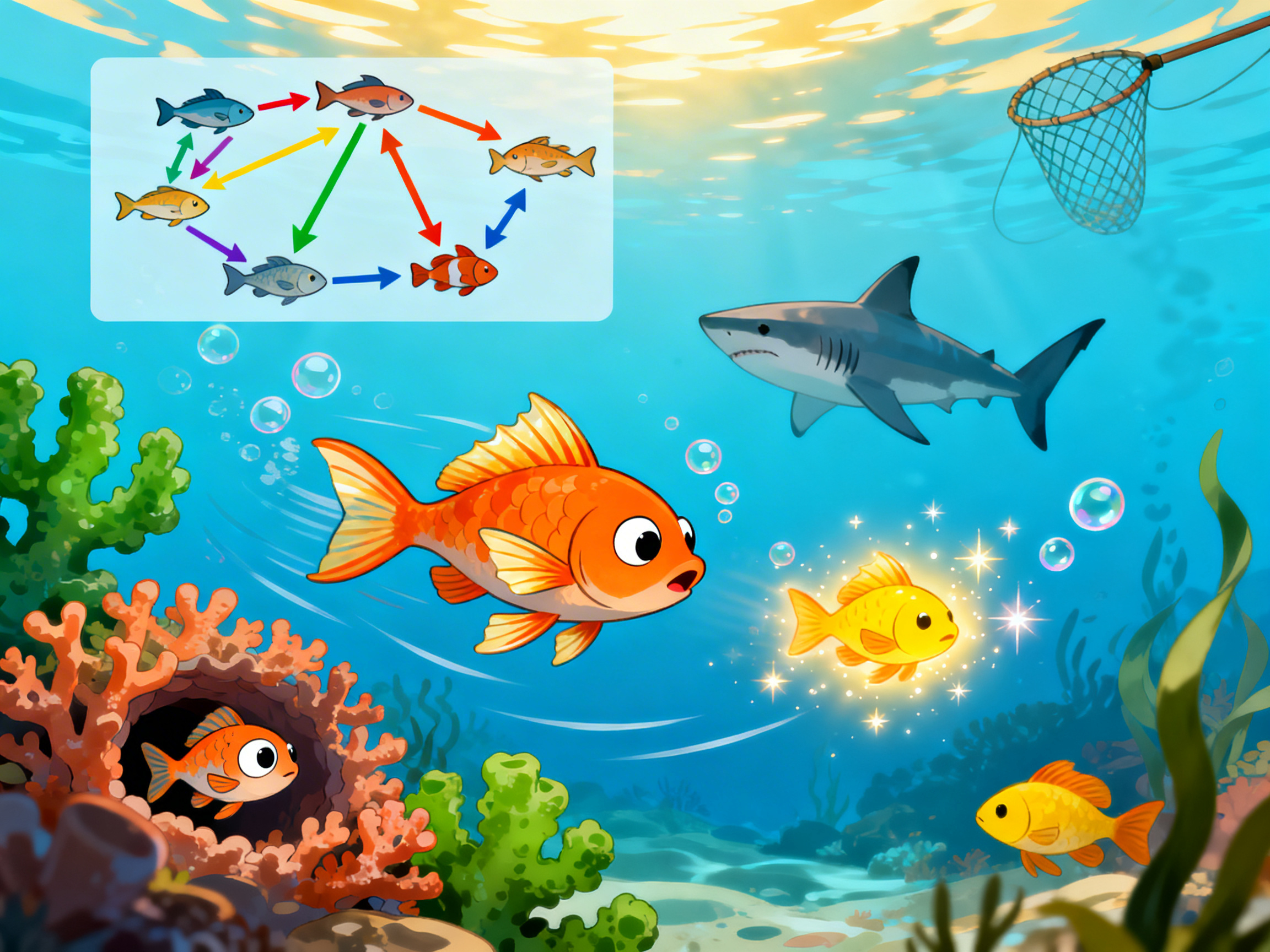
Personality traits have real ecological consequences.
The Carleton University summary notes that the association between capture technique and fish personality could shape population genetics over time.
If angling preferentially removes timid individuals and nets remove bold ones, fisheries might inadvertently select for certain personality traits, potentially altering behaviors related to feeding, reproduction or predator avoidance.
Personality also affects predator–prey interactions.
In the IGB interview, Laskowski explained that perch populations with only shy individuals, only bold individuals or a mix of both can influence entire food webs.
For instance, groups of bold perch may actively hunt more prey, altering prey populations and cascading through the ecosystem, while shy groups may have different impacts. Such behavioral diversity might stabilize ecosystems by spreading risk among different individuals.
In foraging contexts, the 2023 Mexican cavefish study showed that fish with certain swimming personalities performed better at detecting odors.
In environments where food sources are scarce or patchy, individuals with efficient foraging personalities may survive better.
Conversely, bolder individuals might expose themselves to predators or fishing gear, as seen in bluegill sunfish. Thus, personality traits of fish can influence both individual fitness and broader ecological dynamics.
What Factors Shape Fish Personality Traits?
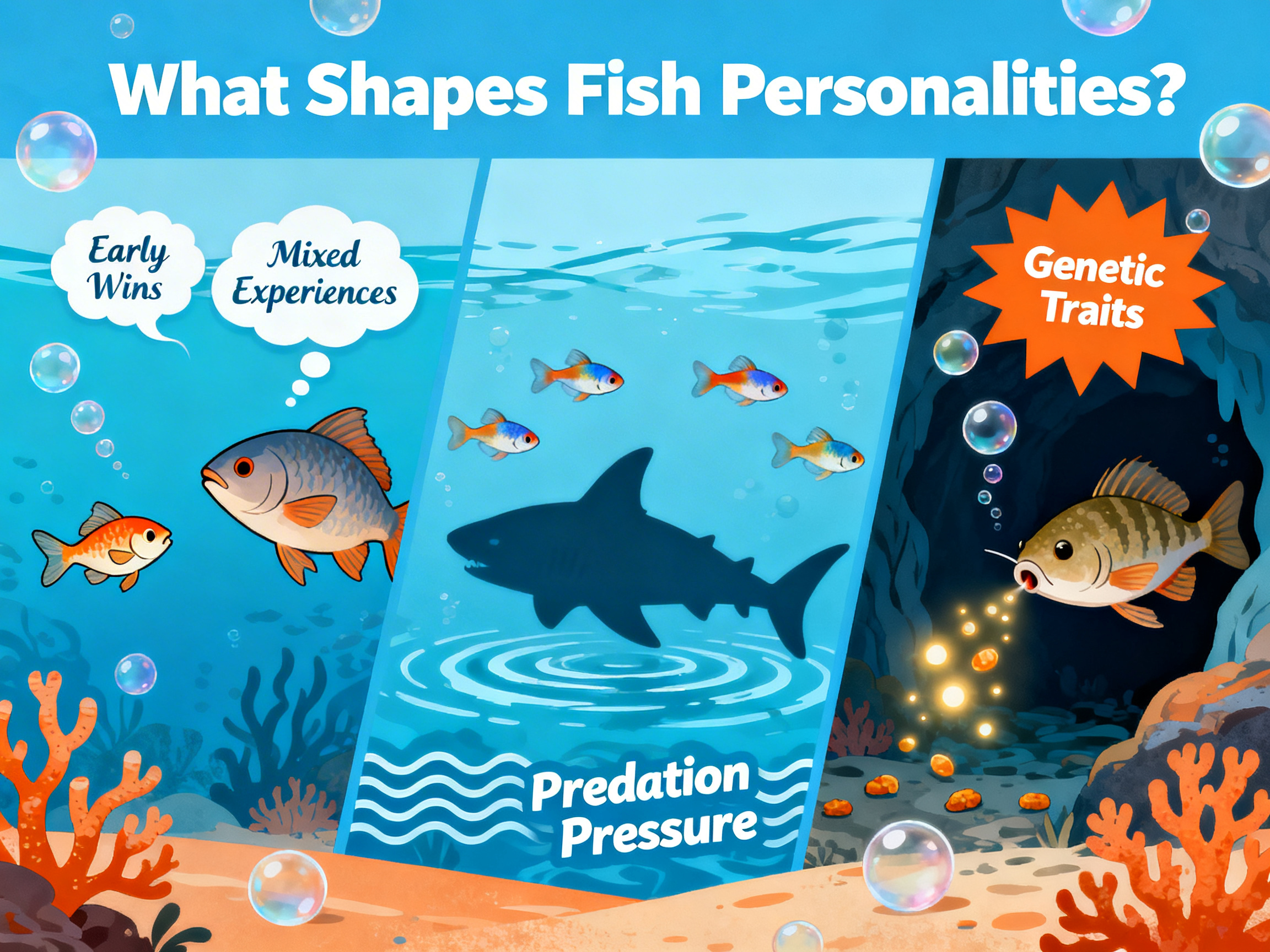
Personality traits arise from a combination of genetics and environment. Early-life experiences, such as social dominance encounters, can produce lasting effects.
The clonal molly experiments showed that fish conditioned to win dominance fights continued to dominate later in life. Those with mixed experiences sometimes developed bold tendencies but often became subordinate when facing assertive individuals. These results imply that repeated successes or failures shape behavioral tendencies.
Environmental pressures like predation also influence personalities.
Guppies exposed to predatory models became more cautious overall, but individual differences persisted. Populations living in high‑predation environments often evolve more cautious behaviors, while those in predator‑free areas can afford greater boldness.
Genetics may play a role as well. The cavefish study discovered that the cave‑dwelling morph’s keen sense of smell and associated foraging personality is genetically encoded. Future research aims to identify genes underlying these traits and to understand how selection shapes personality within and across species.
Why Do Fish Personalities Matter for Aquarists and Ecologists?
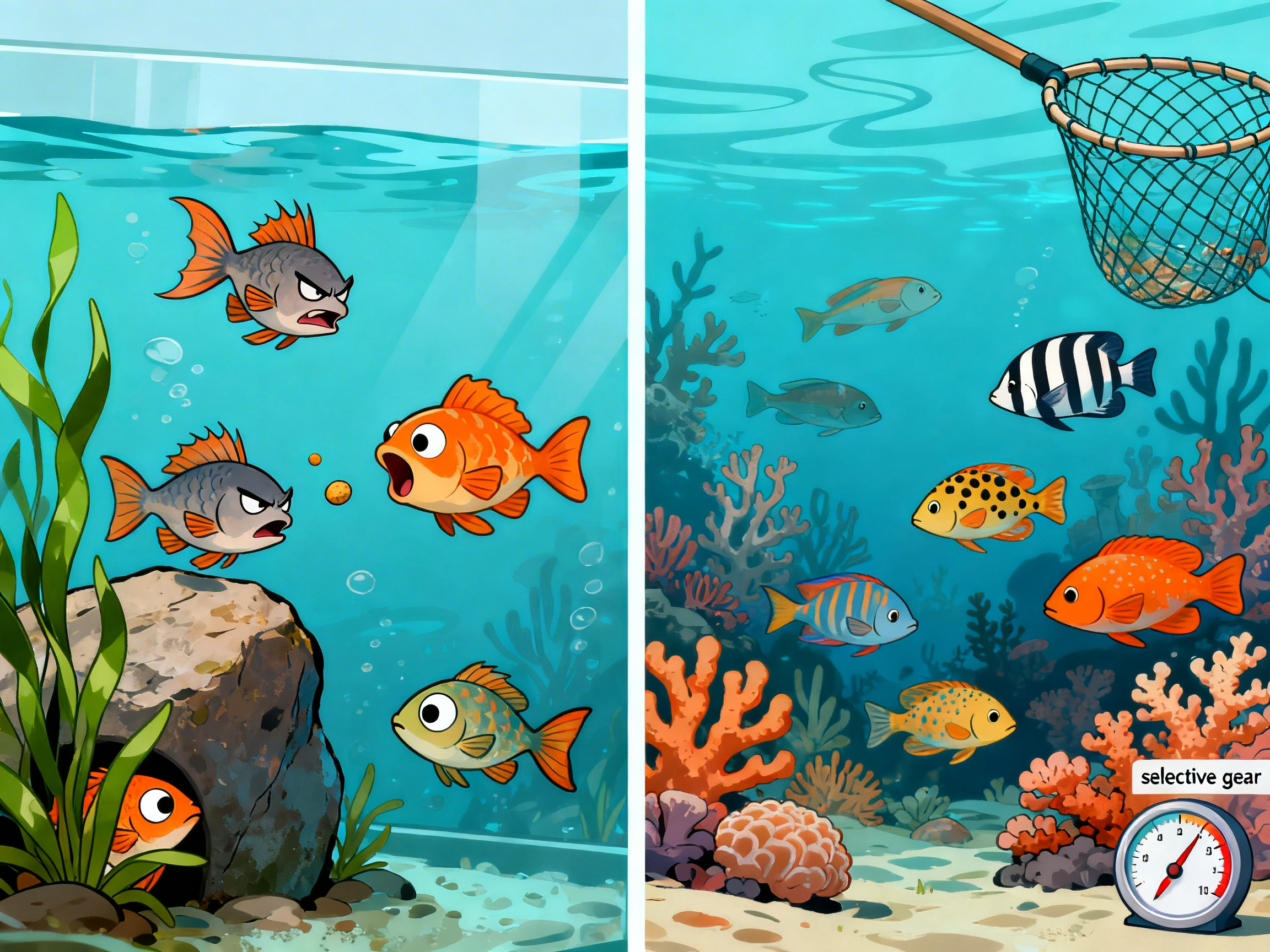
For hobbyists and aquarists seeking compatible tank mates, acknowledging fish personalities can improve animal welfare. A tank full of aggressive, bold fish may lead to constant territorial disputes, whereas mixing bold and shy individuals can create balanced social structures.
Observing how individual fish behave during feeding, exploration and interactions can provide clues about their personality traits and inform choices about tank companions.
Ecologically, preserving behavioral diversity may enhance resilience in wild populations.
If fisheries management favors certain personality traits through selective gear, it could reduce behavioral diversity, making populations more vulnerable to environmental change.
Understanding these subtle fish characteristics helps biologists design conservation strategies that maintain both genetic and behavioral variation.
Conclusion
Fish are far more complex than their streamlined bodies suggest. Their anatomical characteristics: fins, scales, gills, sensory organs and body shapes reflect diverse adaptations to aquatic life.
Meanwhile, modern research reveals that individual fish possess consistent behavioral differences or personalities. Boldness, shyness and specialized foraging strategies are influenced by genetics, early experiences and environmental pressures.
These personality traits of fish not only shape individual survival and social interactions but also affect ecological dynamics and even fisheries management.
By appreciating both the structural and behavioral facets of fish, we gain a deeper understanding of their intrinsic value and the need to conserve the rich diversity of life beneath the waves.
What are fish characteristics?
Fish characteristics are the physical, biological, and behavioral traits that define fish as aquatic animals. These include features like gills for breathing, fins for movement, scales for protection, and sensory systems like the lateral line. Fish characteristics also extend to behavior, such as feeding habits, swimming patterns, and even individual personality traits.
Do fish have personalities?
Yes, fish do have personalities. Research shows that many species display consistent behaviors such as boldness, shyness, aggression, or curiosity. These fish personalities influence how they explore their environment, interact with other fish, and respond to stress. Some fish are naturally more adventurous, while others prefer to stay hidden and cautious.
Why are fish important?
Fish are essential to both ecosystems and human life. They:
- Maintain balance in aquatic ecosystems
- Serve as a major food source worldwide
- Support local economies and fisheries
- Help control algae and pests in aquariums
In home aquariums, fish also provide stress relief, education, and a deeper connection to nature.
What are the key physical characteristics that define different types of fish?
Different types of fish are defined by several key physical traits:
- Body shape (streamlined, flat, eel-like)
- Fin structure and placement
- Scale type or absence of scales
- Mouth position (top, middle, bottom feeders)
- Coloration and patterns
- Gill structure and breathing efficiency
These characteristics determine how fish move, feed, and survive in their environment.
What fish characteristics should I look for when choosing a fish for a home aquarium?
When selecting fish, focus on:
- Temperament (peaceful vs aggressive)
- Size at full growth
- Compatibility with other fish
- Feeding habits
- Swimming level (top, middle, bottom)
- Hardiness and care level
Understanding these fish characteristics helps you build a balanced, stress-free aquarium.
How do fish characteristics influence their suitability for freshwater vs. saltwater tanks?
Fish characteristics play a major role in tank selection:
- Freshwater fish are generally more adaptable and easier to care for
- Saltwater fish often have more specialized needs and vibrant colors
- Differences in osmoregulation (salt balance) determine survival in each environment
- Behavior and diet also vary between freshwater and marine species
Choosing the right environment depends on matching the fish’s natural habitat and biological needs.
What apps or platforms help hobbyists learn fish characteristics and behavior?
Several tools can help aquarium hobbyists learn more about fish:
- Fishkeeping apps like AqAdvisor (for tank planning)
- YouTube channels focused on aquarium care
- Aquarium forums and communities (like Reef2Reef or Fishlore)
- Mobile apps for fish identification and care guides
These platforms make it easier to understand fish behavior, compatibility, and care requirements.
What fish characteristics are most important for selecting fish feed products?
When choosing fish food, consider:
- Diet type (herbivore, carnivore, omnivore)
- Mouth size and feeding style
- Swimming level (surface, mid-water, bottom feeder)
- Digestive needs
- Species-specific nutritional requirements
Matching food to your fish’s natural feeding behavior ensures better health, vibrant color, and reduced waste.
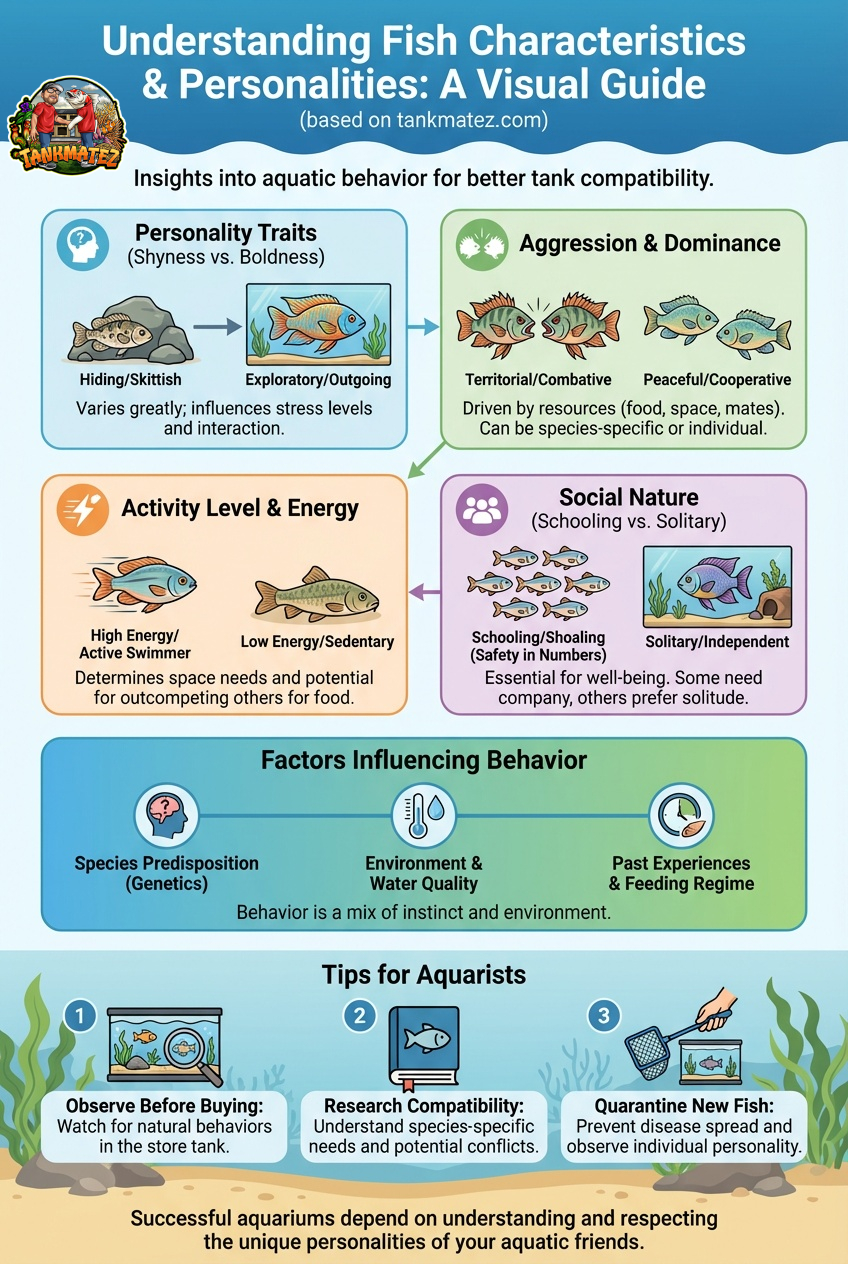
Use Fish Behavior to Your Advantage

Fish naturally explore and feed with curiosity, so why chase them? Turn their instincts into your advantage with a trap designed for zero stress and maximum success.

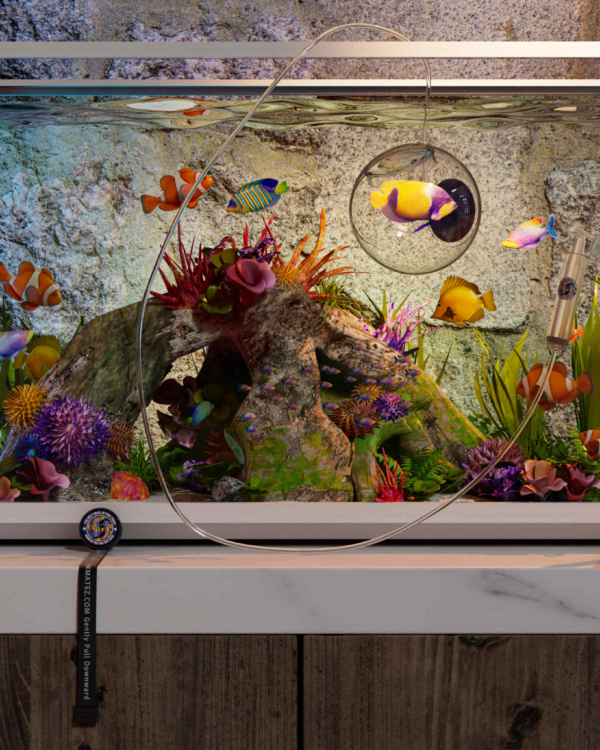
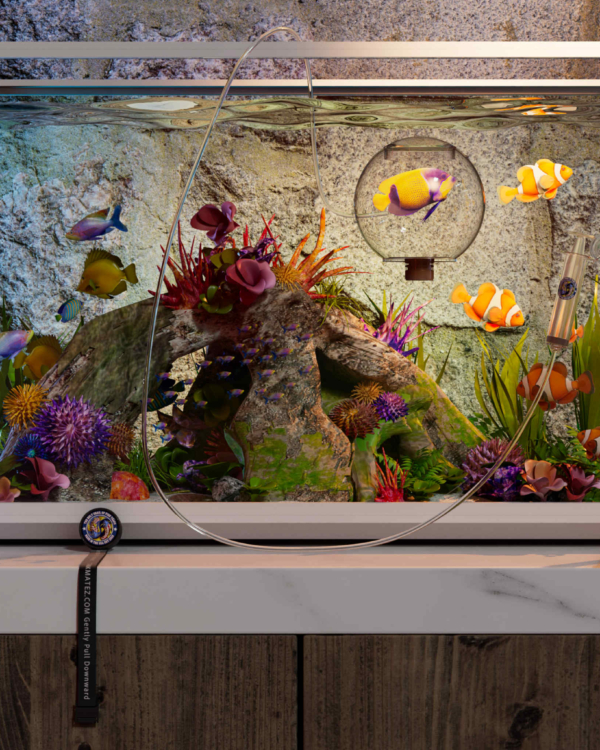


TankMatez Magnetic Bubble Fish Trap
The TankMatez Magnetic Bubble Fish Trap is an innovative solution for every aquarium hobbyist’s age-old problem – the challenge of catching fish with a net. Instead of the usual frantic chase, which often ends up causing undue stress for the fish and potential harm to corals, this device provides a smooth, anxiety-free method to ensnare your aquatic friends. Click Here to see the setup video.