Why Fish Enrichment Is Important: Unlocking the Hidden Intelligence of Aquatic Pets
Introduction
Home aquarium fish are often thought of as simple creatures that swim aimlessly around the tank, yet modern science paints a very different picture.
Fish enrichment isn’t just a trendy term, it’s a critical element of responsible care that taps into the remarkable cognitive abilities of our finned companions.
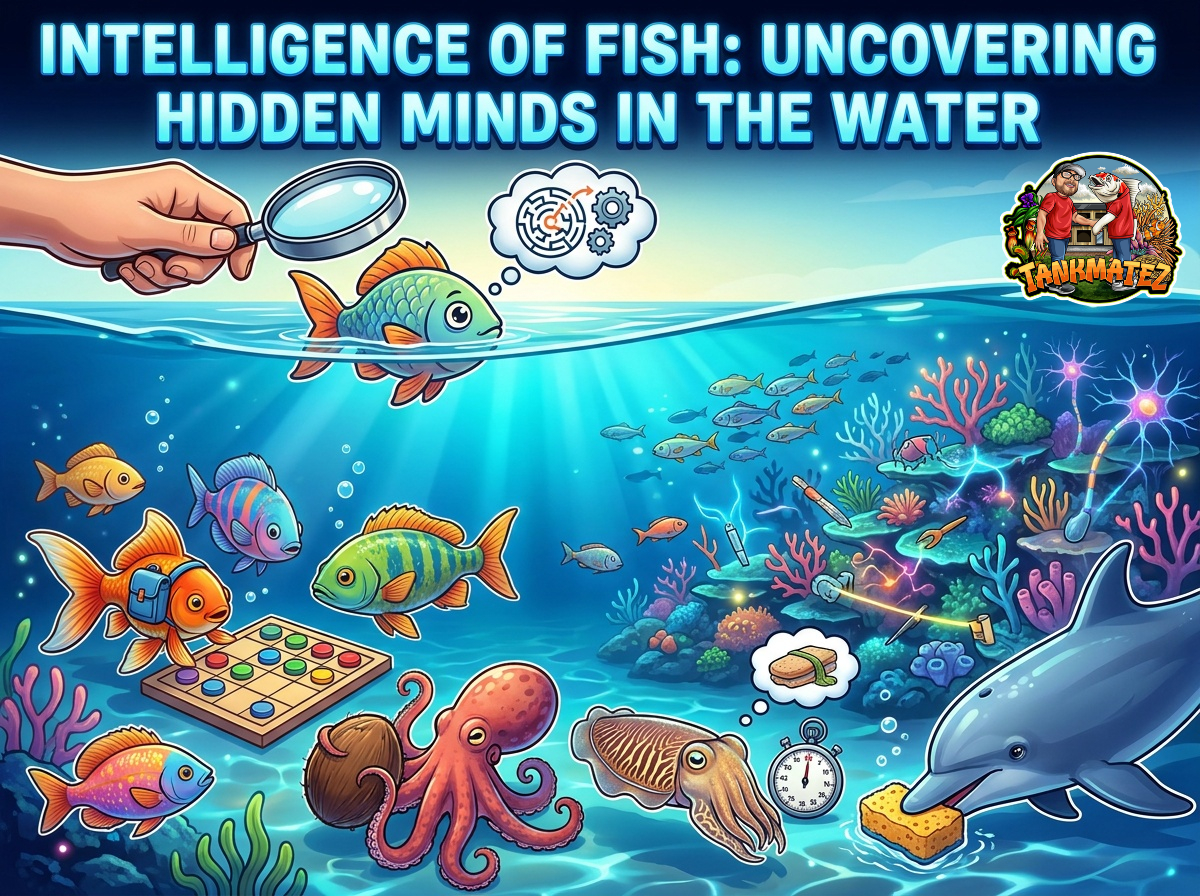
Studies show that fish can distinguish and remember individuals, navigate with mental maps, cooperate, communicate, build complex structures, use tools and even keep track of quantities.
When given the right environment, these abilities flourish. Let’s explore the fascinating world of fish enrichment and understand why every aquarist should embrace enrichment for fish.
The Science Behind Fish Enrichment ▼
What Is Fish Enrichment?
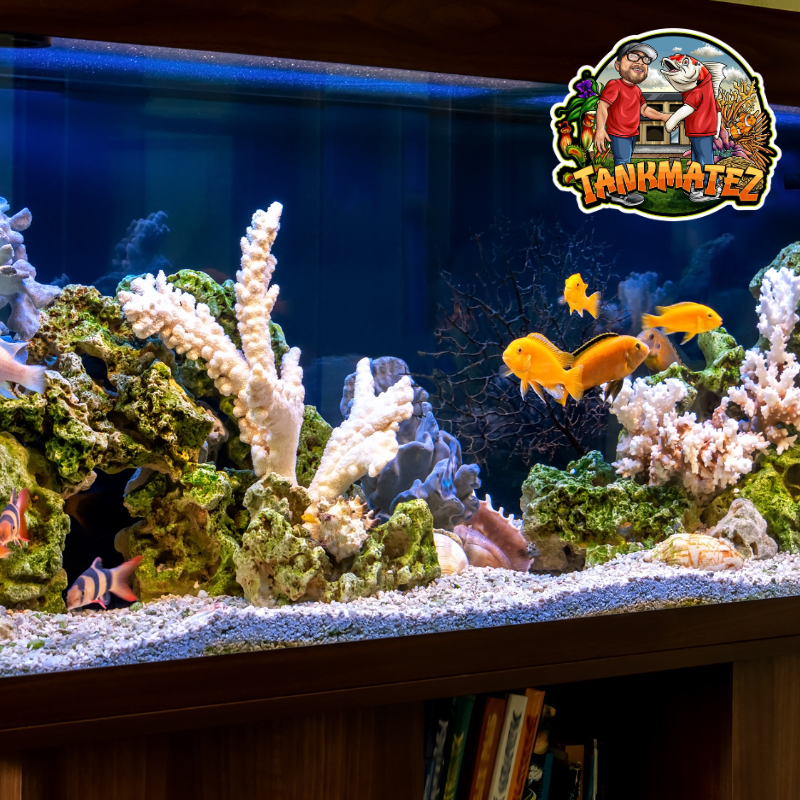
Have you ever wondered what your fish does when you’re not watching? We at TankMatez have designed a one of a kind fish room lab with a cargo net floor that lets them observe aquarium fish without the fish knowing they are being observed. Check out the fish room lab on our instagram and tik tok.
Enrichment is about providing opportunities for mental stimulation, physical exercise and choice.
According to the Shedd Aquarium, enrichment offers animals variety, encourages unique behaviors and adaptations, and gives them choice and control in their environment. This applies as much to fish as it does to mammals and birds.
The Seattle Aquarium categorizes enrichment into sensory stimulation (visual, olfactory, tactile), social groupings, habitat elements, toys and puzzles, food/feeding methods and behavioral training.
Fish enrichment toys, for example, may include floating logs or feeder cones that provide both play and sustenance.
Different Types of Enrichment for Fish
- Sensory enrichment – Vary water flow, lighting and scents. Mirrors or reflective surfaces can stimulate fish that use visual cues.
- Social enrichment – Adjust group sizes or introduce compatible tank mates to encourage schooling or social interactions.
- Habitat enrichment – Rearrange rocks, add plants, build caves or alter the substrate to promote exploration and territory formation.
- Toys and puzzles – Provide fish enrichment toys like feeder balls, floating logs, exercise mirrors or puzzle feeders to prompt problem‑solving and play.
- Feeding enrichment – Hide food, use live prey or feed at varied times and locations to encourage hunting and foraging. Any device that challenges their natural feeding instincts is beneficial to captive pet fish. TankMatez feeding bubbles are perfect for this type of enrichment.
- Behavioral and cognitive enrichment – Train fish to perform simple tasks or offer operant conditioning devices that require them to make choices.
Why Is Fish Enrichment Important?
Enrichment Enhances Cognitive Ability
Fish are smarter than we once believed.
Research demonstrates that living in complex environments stimulates brain plasticity and improves learning. For example, juvenile black rockfish raised in enriched tanks performed better in maze experiments, displaying stronger learning and cognitive abilities compared with fish from barren environments.
The enriched fish also showed higher levels of brain‑derived neurotrophic factor and nerve growth factor, indicating enhanced neuroplasticity.
Similarly, a study on farmed rainbow trout found that fish reared in enriched environments with plants, rocks and pipes completed learning tasks and reversal learning (a test of cognitive flexibility) in fewer trials than fish raised in barren conditions. The authors concluded that aquaculture should consider the cognitive abilities of fish by allowing them to live in enriched environments.
Another experiment with guppies revealed that fish raised in enriched aquaria learned color discrimination faster than those in barren tanks, although enrichment did not affect inhibitory control or cognitive flexibility.
These findings suggest that fish enrichment can accelerate learning and provide species‑specific cognitive benefits.
Enrichment Supports Welfare and Emotional Well‑Being
Enrichment Enhances Cognitive Ability
Fish are smarter than we once believed.
Research demonstrates that living in complex environments stimulates brain plasticity and improves learning. For example, juvenile black rockfish raised in enriched tanks performed better in maze experiments, displaying stronger learning and cognitive abilities compared with fish from barren environments.
The enriched fish also showed higher levels of brain‑derived neurotrophic factor and nerve growth factor, indicating enhanced neuroplasticity.
Similarly, a study on farmed rainbow trout found that fish reared in enriched environments with plants, rocks and pipes completed learning tasks and reversal learning (a test of cognitive flexibility) in fewer trials than fish raised in barren conditionsfrontiersin.org. The authors concluded that aquaculture should consider the cognitive abilities of fish by allowing them to live in enriched environments.
Another experiment with guppies revealed that fish raised in enriched aquaria learned color discrimination faster than those in barren tanks, although enrichment did not affect inhibitory control or cognitive flexibility.
These findings suggest that fish enrichment can accelerate learning and provide species‑specific cognitive benefits.
Enrichment Supports Welfare and Emotional Well‑Being
Fish welfare is more than the absence of disease; it includes psychological well‑being.
The International Fund for Animal Welfare defines good welfare as a state that supports both safety and positive emotional experiences. The IAABC notes that growing scientific evidence reveals fish have behavioral complexity and cognitive abilities, challenging the notion that fish are passive pets.
Their guidance emphasizes that enrichment should offer opportunities for self‑maintenance, choice, control and cognitive stimulation.
Enrichment also reduces stress.
The Seattle Aquarium reports that fish receive enrichment at least twice per week, which can include altering currents or adding hiding places, and that mental stimulation is as important as physical stimulation.
With proper enrichment, fish can display a broader range of natural behaviors and are less likely to exhibit signs of stress or lethargy.
Play and Exploration: Fish Have Fun Too
Do fish enjoy playing? Surprisingly, yes.
A University of Tennessee study documented cichlid fish repeatedly striking a bottom‑weighted thermometer, which researchers classified as play behavior.
The fish interacted with the object for no apparent purpose other than enjoyment. Play, a behavior associated with intelligence and positive emotional states, is therefore part of fish life. It underscores why enrichment for fish is more than a welfare requirement—it’s an avenue for joy.
Understanding Fish Intelligence to Tailor Enrichment
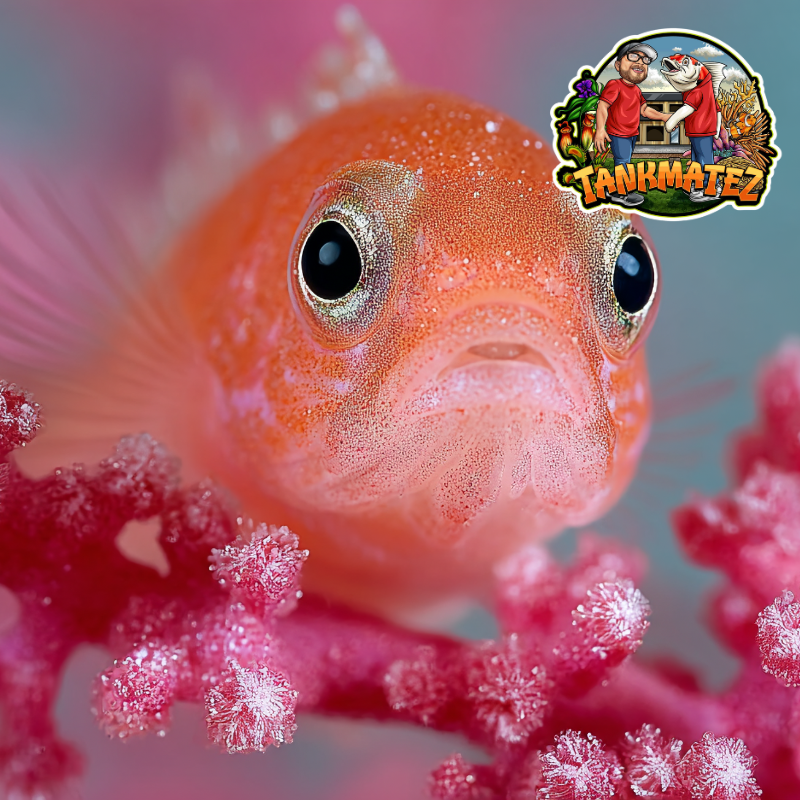
To design effective fish enrichment, it’s essential to appreciate how intelligent and diverse fish are.
There are over 30,000 species, each with unique ecological niches. Goldfish myths aside, fish can remember individuals, navigate using mental maps, communicate and even use tools.
Because many studies focus on a handful of lab species, researchers like Vila‑Pouca and colleagues developed a flexible cognitive apparatus to test wild fish, revealing that guppies and sticklebacks learn tasks and exhibit producer–scrounger dynamics when accessing food.
This diversity means fish enrichment toys and strategies must reflect the natural history and social structure of each species.
Practical Enrichment Ideas for Home Aquariums
1. Recreate Natural Habitats
Start by researching the natural environment of your fish: Are they shoaling species that thrive in open water, or bottom dwellers that hide among roots and rocks?
Enrich their tank with live plants, driftwood, caves and different substrates.
Bettas, for instance, appreciate dense vegetation and floating leaves to rest under. This form of enrichment for fish encourages exploration and nesting behaviors.
2. Use Fish Enrichment Toys and Puzzles
Add puzzle feeders that require fish to manipulate objects to access food.
Floating logs and worm feeder cones stimulate exploration and provide hiding spots.
For more interactive play, provide mirrors for betta fish to flare at their reflection for a few minutes a day, simulating natural territorial displays.
For larger species, custom DIY toys made from PVC pipes or submerged ping‑pong balls can promote investigation and play.
Remember to avoid sharp edges or toxic materials.
3. Vary Feeding Methods
Feeding time can be an enriching event.
Scatter food across different areas, use feeding rings, place pellets in a puzzle feeder or offer live foods like brine shrimp or daphnia (when appropriate) to trigger hunting instincts.
According to the Shedd Aquarium, food enrichment encourages natural foraging behaviors and provides mental engagement.
Avoid overfeeding; the goal is to make feeding an active challenge.
4. Create Environmental Challenges
Introduce gentle water currents or bubble streams in specific sections of the tank to mimic river flows.
Rearrange decor periodically to present a new layout and encourage fish to explore and establish territories.
Provide hiding spaces at different levels and use plants to create corridors and shading, which can reduce aggression and provide security for shy species.
5. Incorporate Social Complexity
Many fish are social.
Schooling species like tetras, danios and rasboras need groups to feel secure. Ensuring proper group sizes encourages natural social behaviors.
Conversely, territorial species need defined boundaries and may benefit from visual barriers.
Monitoring interactions and adjusting group compositions accordingly is part of effective fish enrichment.
6. Train Your Fish
Training isn’t limited to dolphins.
Simple clicker training or target feeding can teach fish to swim to specific areas or perform tasks.
The Shedd Aquarium notes that training sessions provide mental stimulation and physical exercise and help animals participate in their own care.
For fish, training can include teaching them to swim through hoops, push a ball or activate a lever for food.
The IAABC encourages individualized, goal‑oriented enrichment that recognizes the behavioral diversity of fish.
Ensuring Safety and Effectiveness
Not all toys or changes benefit every species. Effective enrichment for fish requires understanding species‑specific needs and individual personalities.
Monitor fish for signs of stress, aggression or disinterest when introducing a new enrichment item.
Keep toys clean and remove any object that causes injury or stress. Where live food is used, ensure it is disease‑free.
Introduce changes gradually, especially with sensitive species.
Benefits of Enrichment for Fish and Aquarists
Better Physical and Mental Health
Enriched fish are often more active, display natural behaviors and show improved growth.
In black rockfish, enriched environments increased levels of growth hormones and neurotrophic factors, suggesting improved physiological health.
In rainbow trout, enriched fish learned tasks faster and exhibited greater cognitive flexibility.
Even though enrichment didn’t improve every cognitive trait in guppies, it still enhanced learning.
Reduced Stress and Aggression
Providing hiding places, varying the environment and offering cognitive challenges can reduce boredom, stress and aggression.
Fish in enriched tanks can better cope with changes, such as maintenance or new tank mates.
By giving fish control and choice, enrichment improves their resilience.
More Engaging Aquariums
Watching fish interact with their environment, solve puzzles or display courtship behaviors makes fishkeeping more rewarding.
Enrichment encourages curious behaviors that give aquarists insights into fish personalities and fosters greater empathy.
As Mary Bates writes, changing public perception about fish intelligence can drive better care and appreciation.
Improved Conservation and Aquaculture Practices
Enrichment principles extend beyond home aquaria to aquaculture and conservation programs.
The rainbow trout study suggests that farming conditions should provide enrichment to enhance cognitive abilities and welfare.
By acknowledging fish intelligence and needs, aquaculture can improve stocking success and reduce stress.
Conservation programs, such as those at public aquariums, use enrichment to prepare fish for release or to maintain natural behaviors in breeding programs.
Conclusion: Embrace Fish Enrichment
Fish are intelligent, emotionally complex and deserving of environments that challenge and engage them.
Fish enrichment is not merely a hobbyist’s gimmick; it is a scientifically supported approach to animal welfare.
Through sensory stimulation, social opportunities, habitat complexity, toys, puzzles and varied feeding, we can create aquariums that mirror natural habitats and satisfy the cognitive and behavioral needs of fish.
Enrichment improves learning, enhances neuroplasticity, reduces stress and reveals the hidden brilliance of our aquatic companions.
As more research highlights the sophistication of fish minds, adopting comprehensive fish enrichment strategies becomes both an ethical imperative and a source of joy.
Let’s retire outdated myths and celebrate fish for what they truly are. Curious, learning animals that flourish when we enrich their world.
Do fish need enrichment?
Yes. Research shows fish are intelligent and benefit from enrichment that encourages exploration, problem-solving, and natural behaviors.
Are fish endangered?
Some fish species are endangered due to habitat loss, pollution, overfishing, and climate change, while many common aquarium fish are responsibly captive-bred.
What are some fish enrichment ideas?
Rotating decorations, feeding challenges, mirrors, caves, artificial plants, and interactive feeding tools all provide effective fish enrichment.
What are the best fish enrichment products for home aquariums?
The best products encourage natural behavior. The TankMatez Bubble Fish Trap triples as a trap, feeding and enrichment device by promoting curiosity and engagement during feeding.
What are the benefits of using artificial plants and caves for fish enrichment?
Artificial plants and caves provide shelter, reduce stress, create territory boundaries, and encourage exploration without impacting water quality.
What fish enrichment tools do aquarium specialists recommend?
Aquarium specialists recommend enrichment that supports feeding instincts, visual stimulation, and exploration, including interactive feeders like the TankMatez Bubble Fish Trap.
What are good fish enrichment ideas for cichlids and other territorial species?
Territorial species benefit from caves, visual barriers, rearranged décor, and enrichment tools that redirect aggression into exploration and feeding challenges. Territorial species benefit from caves, visual barriers, rearranged décor, and enrichment tools that redirect aggression into exploration and feeding challenges.
How can enrichment tools improve fish behavior?
Enrichment tools reduce boredom and stress, encourage natural instincts, improve feeding response, and promote healthier, more balanced behavior.
What fish enrichment products use natural textures and materials?
Products made from reef-safe plastics, smooth acrylic, ceramic, and natural-looking textures help replicate environmental complexity without harming fish.
Where can I find eco-friendly fish enrichment products?
Eco-friendly fish enrichment products made from reef-safe materials can be found here at TankMatez and other specialty aquarium retailers.
What fish enrichment accessories promote fish health and activity?
Accessories that encourage movement, exploration, and interactive feeding, such as caves: mirrors, feeding puzzles, and enrichment-based fish traps support long-term fish health and activity.
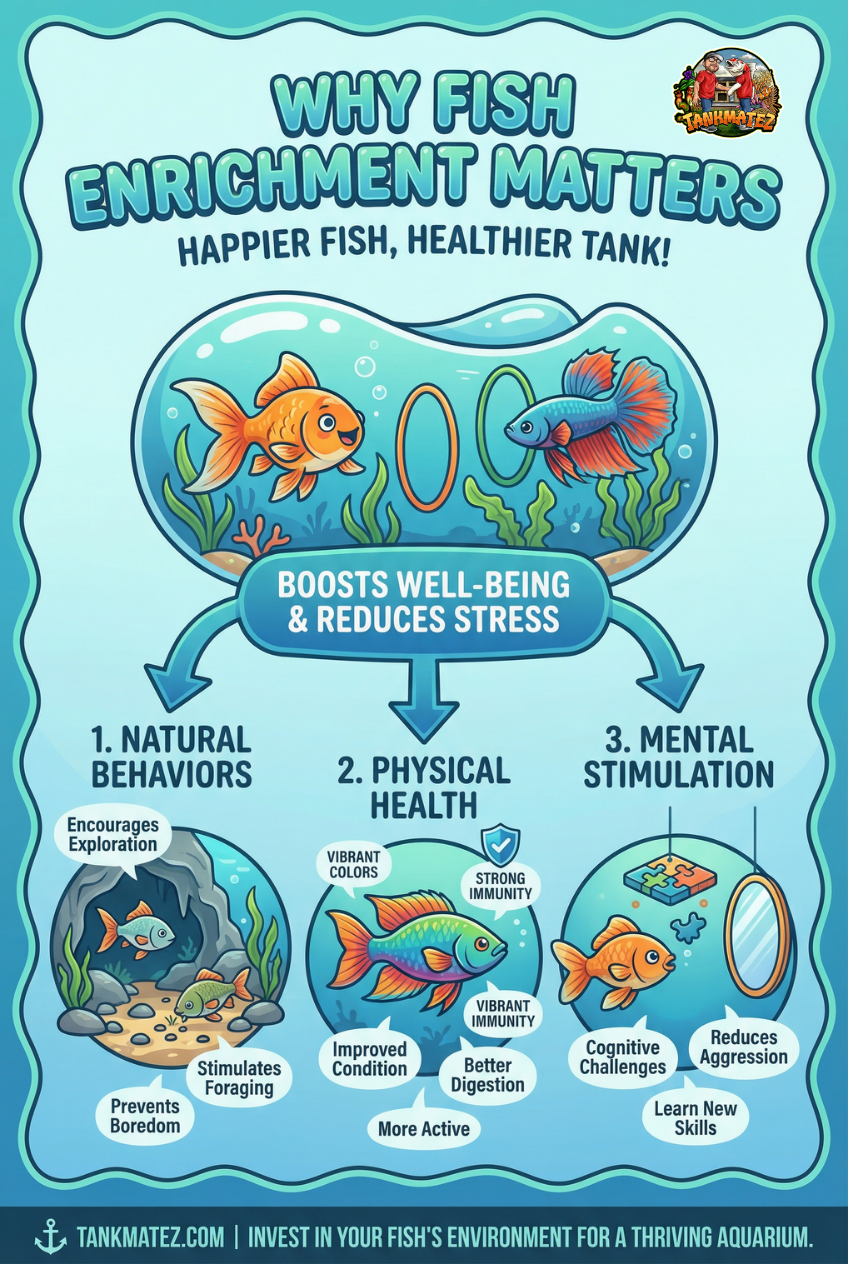
Turn Feeding Time Into Fish Enrichment
Enrichment isn’t just toys and decorations. It’s engagement. When you feed through the TankMatez Bubble Fish Trap, fish must explore, investigate, and problem-solve to access food. The clear acrylic globe encourages natural curiosity, while the built-in mirror lure adds visual stimulation by letting fish see and react to their reflection.
Instead of chasing fish with nets or dumping food into the tank, this creates a mentally stimulating routine that supports fish enrichment, reduces stress, and mimics natural feeding behaviors. Feeding becomes interactive, rewarding, and enriching for your entire tank.
See the Bubble Fish Trap below to turn everyday feeding into meaningful enrichment.

TankMatez Magnetic Bubble Fish Trap
The TankMatez Magnetic Bubble Fish Trap is an innovative solution for every aquarium hobbyist’s age-old problem – the challenge of catching fish with a net. Instead of the usual frantic chase, which often ends up causing undue stress for the fish and potential harm to corals, this device provides a smooth, anxiety-free method to ensnare your aquatic friends. Click Here to see the setup video.