Why Fish Tank Enrichment Matters: Ideas, Benefits and Safety
Key Takeaways
- Fish tank enrichment encourages exploration, foraging, problem-solving, and other natural behaviors.
- Enrichment can include structural, feeding, sensory, social, and cognitive activities.
- Enrichment should always be selected for the fish’s species, temperament, size, and natural habitat.
- Small, gradual changes are generally safer than completely rearranging an established aquarium.
- Water quality, nutrition, tank size, and compatible tank mates remain the foundations of responsible fish care.
- A familiar object paired with food, such as the TankMatez Magnetic Bubble Fish Trap, can encourage curiosity while helping fish become comfortable entering the trap before it is needed.
Introduction
Many aquarium owners devote countless hours to maintaining crystal-clear water, choosing nutritious food, and keeping their fish healthy. Yet one essential part of aquarium care is often overlooked: fish tank enrichment.
In nature, fish live in environments that are constantly changing. Currents shift sand. Storms rearrange rocks. Plants grow. Algae appears and disappears. New hiding places form, while familiar pathways change over time.
Fish spend their days exploring, searching for food, navigating obstacles, avoiding threats, defending territories, and interacting with other animals. Their surroundings give them opportunities to make choices and respond to new challenges.
A home aquarium can be very different. The rocks, caves, decorations, and swimming routes may remain unchanged for months or even years.
Although consistency helps fish feel secure, an environment that never changes may offer limited opportunities for exploration and mental engagement.
That is where fish tank enrichment can help.
The Complete Guide to Fish Tank Enrichment ▼
What Is Fish Tank Enrichment?
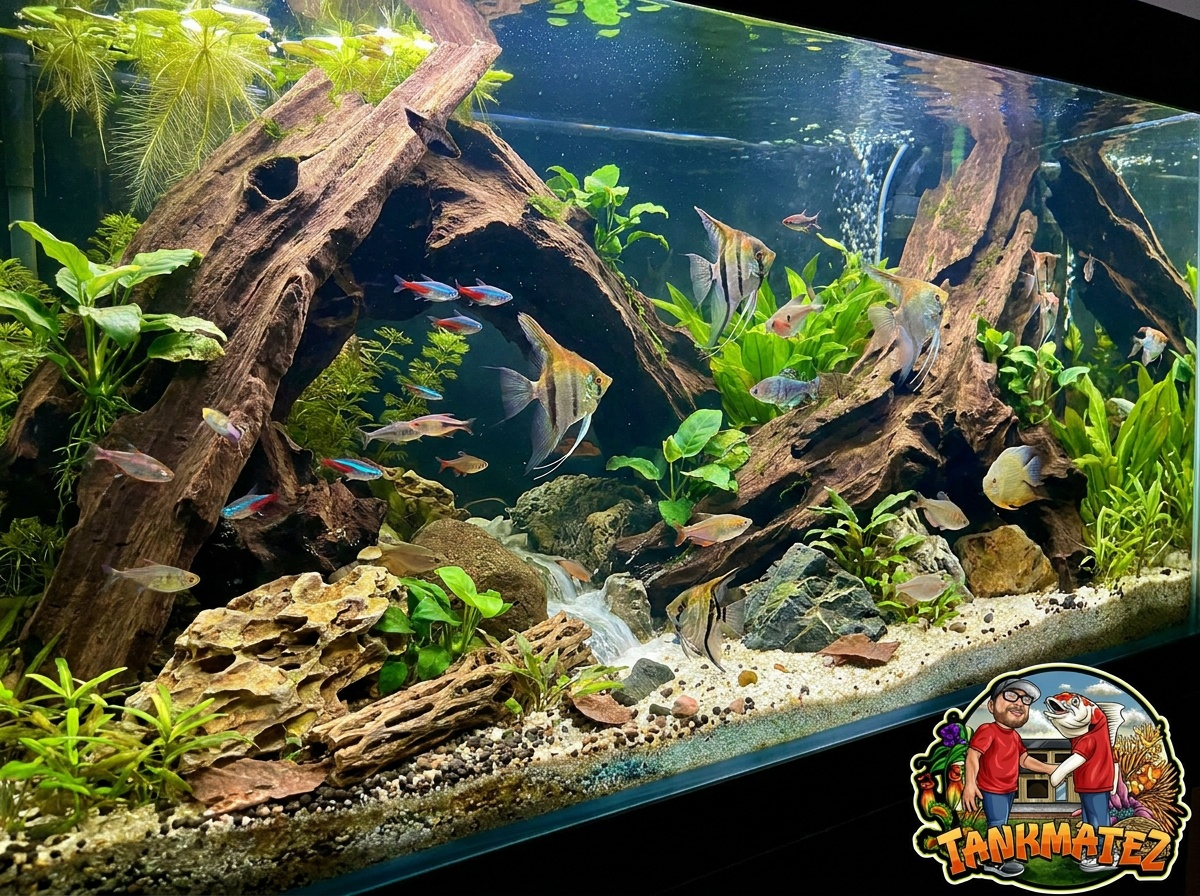
Fish tank enrichment is the thoughtful addition or modification of features, activities, and experiences that encourage fish to express natural behaviors.
Depending on the species, those behaviors might include:
- Exploring unfamiliar spaces
- Searching or working for food
- Swimming through different water-flow patterns
- Using caves and sheltered areas
- Investigating safe objects
- Sifting or digging in substrate
- Grazing on appropriate surfaces
- Establishing and navigating territories
- Interacting with compatible members of the same or other species
Enrichment does not mean randomly placing toys in an aquarium. It should have a purpose and support a behavior that is natural and beneficial for the fish.
Researchers commonly describe several forms of enrichment, including structural, feeding, sensory, cognitive, and social enrichment. A 2023 review of fish welfare in public aquariums and zoological collections recommends using enrichment when possible to make captive environments more stimulating and give fish opportunities to express species-appropriate behavior.
Why Do Fish Need Environmental Enrichment?
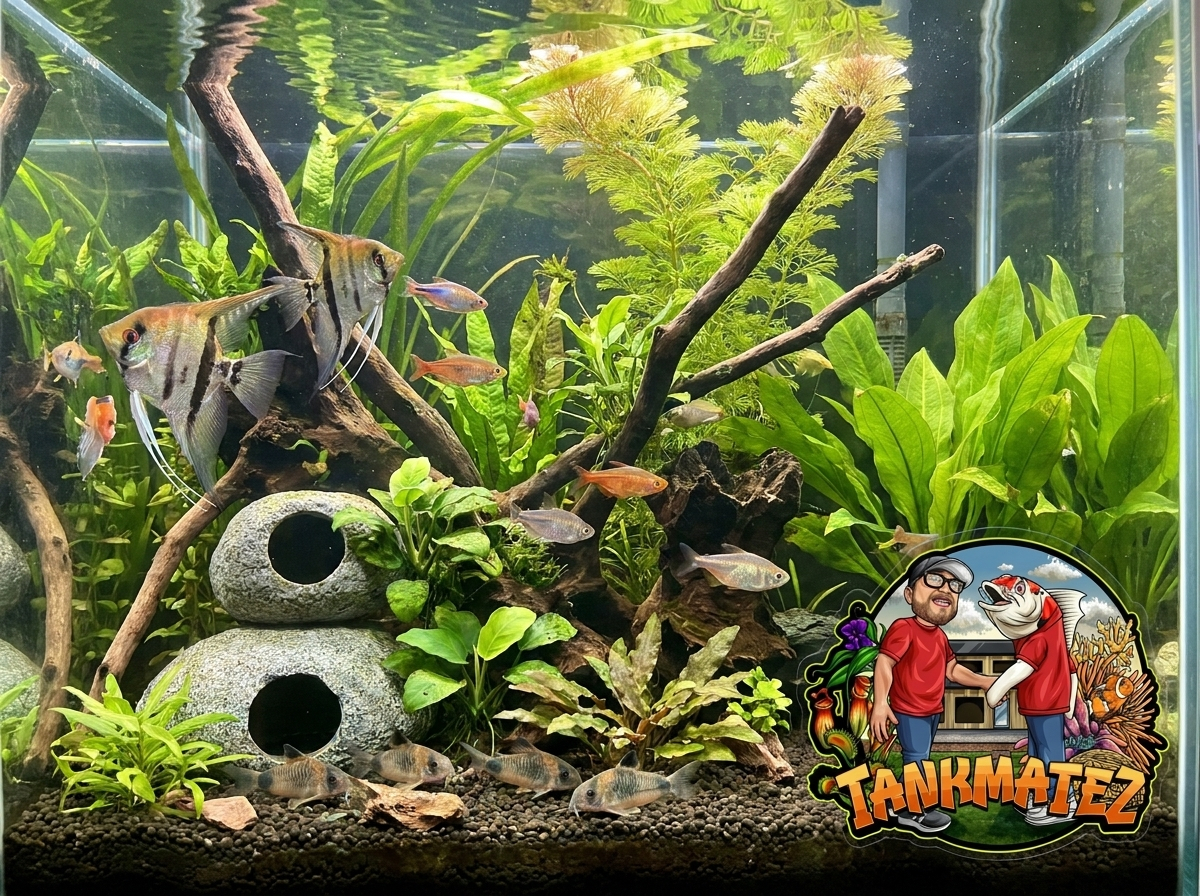
You might wonder, “If my fish are eating well and the water parameters are stable, why would they need anything else?”
Clean water, appropriate temperature, proper nutrition, adequate space, and compatible tank mates will always come first. Enrichment cannot compensate for poor husbandry.
However, surviving in suitable water is not the same as having opportunities to explore and perform natural behaviors.
Fish are not passive decorations. Different species can learn routines, remember locations, recognize feeding cues, solve simple problems, and adjust their behavior based on experience.
Research into captive fish has found that appropriately enriched environments can influence exploration, learning, anxiety-related behavior, aggression, and physiological responses. The results vary between species and enrichment methods, which is why enrichment must be chosen carefully rather than applied as a universal formula.
For example:
- A review of environmental enrichment for laboratory zebrafish found that enrichment can affect fish behavior, physiology, and welfare, although the outcome depends on factors such as design and implementation.
- Research involving rainbow trout found that environmental enrichment may improve aspects of cognitive flexibility.
- A study of African catfish found that certain enriched conditions affected growth, feeding response, aggression, shoaling, and physiological measures. The authors emphasized that enrichment can take structural, feeding, cognitive, physical, or social forms. Read the full environmental-enrichment study.
These studies do not prove that every enrichment idea benefits every aquarium fish. They do show why fish keepers should consider behavioral opportunities alongside physical health.
Can Fish Become Bored in an Aquarium?
“Boredom” is difficult to measure in fish because they cannot tell us what they are experiencing. For that reason, it is better to focus on observable behavior instead of trying to assign a human emotion to every action.
Ask practical questions:
- Does the fish explore different areas of the aquarium?
- Does it forage or investigate its surroundings?
- Can it retreat to a secure hiding place?
- Does it spend most of the day repeating one swimming pattern?
- Has aggression increased?
- Is the fish unusually inactive?
- Does it immediately investigate a safe new object?
- Can it choose between open and sheltered areas?
Repeated pacing, glass surfing, unusual inactivity, hiding, aggression, appetite changes, or rapid breathing can have many causes. Poor water quality, disease, incompatible tank mates, insufficient space, incorrect flow, lighting, and stress should be investigated before assuming a lack of stimulation.
Enrichment may be part of the solution, but it should never replace proper diagnosis or husbandry.
What Are the Main Types of Fish Tank Enrichment?
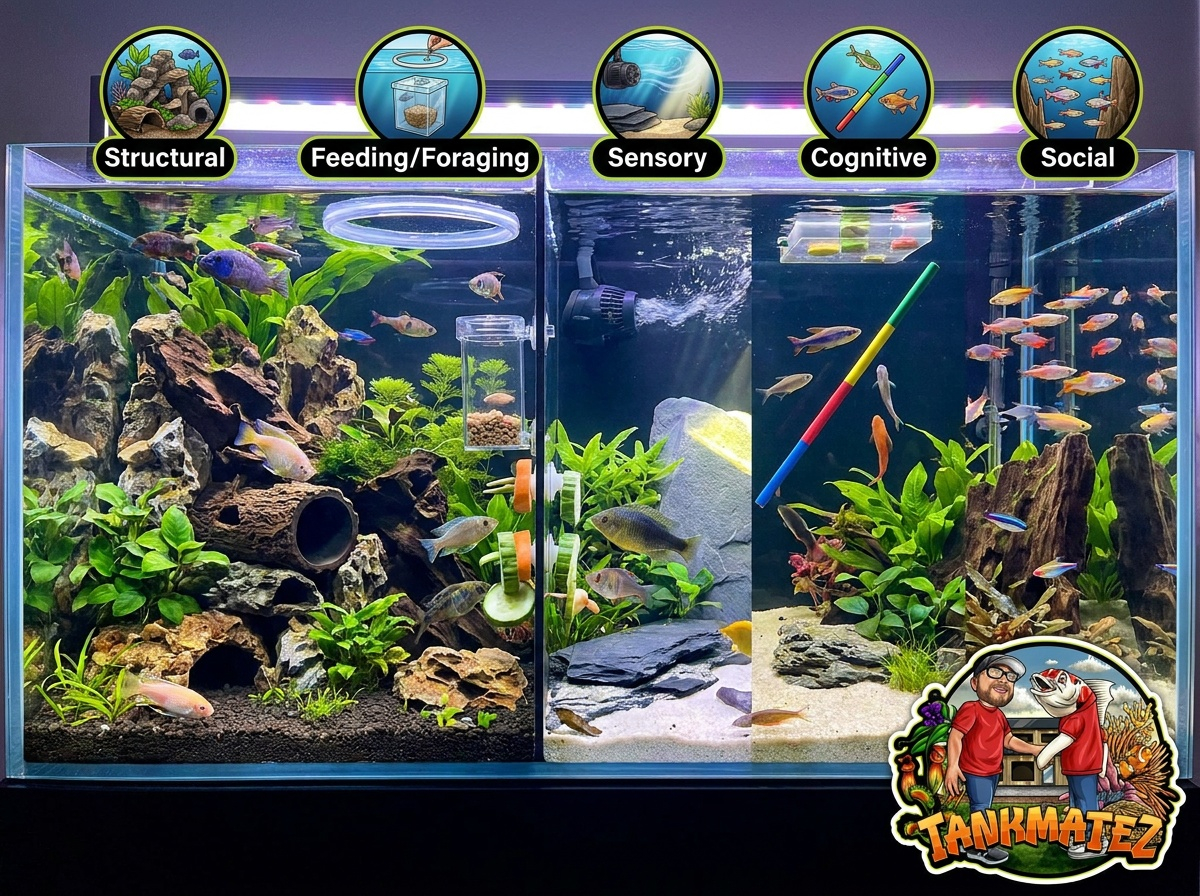
The best enrichment programs use more than one type of stimulation. You do not need to introduce everything at once. Begin with one safe, species-appropriate change and observe how the fish responds.
1. Structural Enrichment
Structural enrichment changes the physical environment in which a fish moves, rests, hides, or establishes territory.
Examples include:
- Natural or artificial plants
- Caves and tunnels
- Rock formations
- Driftwood
- Species-appropriate substrate
- Overhangs and shaded areas
- Open swimming lanes
- Removable or interchangeable aquascape features
Structural complexity may help fish use more of the aquarium while providing shelter and visual barriers. This can be particularly valuable for shy fish or species that naturally occupy caves, vegetation, rockwork, or defined territories.
However, more structure is not automatically better.
Too many decorations can reduce swimming space, trap debris, create unsafe gaps, or allow one territorial fish to control every important resource.
Questions aquarium owners ask about structural enrichment
- How can I make a bare aquarium more interesting for my fish?
- Should I add more caves if my fish keeps hiding behind the filter?
- Can changing the rockwork encourage my fish to explore?
- How often should I rearrange aquarium decorations?
- Will adding a new tunnel help a shy fish become more active?
- What enrichment can I add without replacing my entire aquascape?
2. Feeding and Foraging Enrichment
In nature, food rarely arrives in the same corner at exactly the same depth every day. Fish may graze, sift substrate, search crevices, chase moving prey, or inspect unfamiliar areas.
Feeding enrichment changes how food is presented without overfeeding.
Possible ideas include:
- Placing food in different safe areas
- Using a feeding ring
- Offering an appropriate food that can be grazed
- Attaching suitable vegetables for herbivorous species
- Spreading food across a wider area for shoaling fish
- Hiding a small amount of food inside a safe feeding object
- Training fish to follow a target or enter a familiar container for a reward
Every feeding activity should match the species’ diet and feeding behavior.
Remove uneaten food before it harms water quality, and include enrichment food in the fish’s normal daily ration.
Can a fish trap be used for feeding enrichment?
A passive aquarium fish trap can become a familiar part of the environment before a fish ever needs to be captured.
The TankMatez Fish Trap can be placed in the aquarium and used as a feeding station. Food placed inside encourages fish to investigate and voluntarily enter the transparent chamber.
This creates a simple exploration and foraging activity while helping the fish learn that the trap is a familiar place. If the fish later needs to be moved to quarantine, relocated, or removed for another reason, that familiarity may make passive capture easier and reduce the need for a frantic net chase.
Use the trap only under supervision, follow its operating instructions, and make sure its size is appropriate for the fish.
To learn more about feeding, learning, and behavioral engagement, read Why Fish Enrichment Is Important.
3. Sensory Enrichment
Fish experience their environment through more than sight. They can respond to water movement, chemical cues, vibration, light, texture, and other sensory information.
Safe sensory enrichment might involve:
- Creating gentle variations in water flow
- Providing shaded and illuminated areas
- Adding safe surfaces with different textures
- Introducing naturalistic visual complexity
- Allowing fish to observe activity outside the aquarium without constant disturbance
Sensory enrichment must be subtle. Flashing lights, tapping on the glass, loud vibrations, abrupt shadows, and extreme flow changes are more likely to frighten fish than enrich them.
4. Cognitive Enrichment
Cognitive enrichment gives an animal an opportunity to learn, investigate, make a choice, or solve a simple challenge.
For aquarium fish, this could include:
- Target training
- Learning to enter a designated feeding area
- Following a colored cue
- Searching for food in changing locations
- Navigating a safe tunnel or route
- Investigating a new but nonthreatening object
- Choosing between sheltered and open spaces
Keep training sessions brief and voluntary. Food rewards should come from the fish’s regular ration so the activity does not lead to overfeeding.
The goal is not to make a fish perform tricks for entertainment. The goal is to create opportunities for learning, choice, and natural exploration.
5. Social Enrichment
For some fish, living with compatible members of the same species supports natural shoaling, schooling, courtship, or social behavior. For others, forced social contact can produce aggression and chronic stress.
Social enrichment is therefore highly species-specific.
Before adding another fish, consider:
- Natural group size
- Adult body size
- Sex ratio
- Territorial behavior
- Tank dimensions
- Available hiding places
- Feeding competition
- Compatibility with existing inhabitants
- Filtration and biological capacity
Never add a fish solely to entertain another fish. A mirror should also be used cautiously, if at all. Territorial species may interpret their reflection as an intruder, and prolonged exposure can create stress.
How Often Should You Change Aquarium Enrichment?
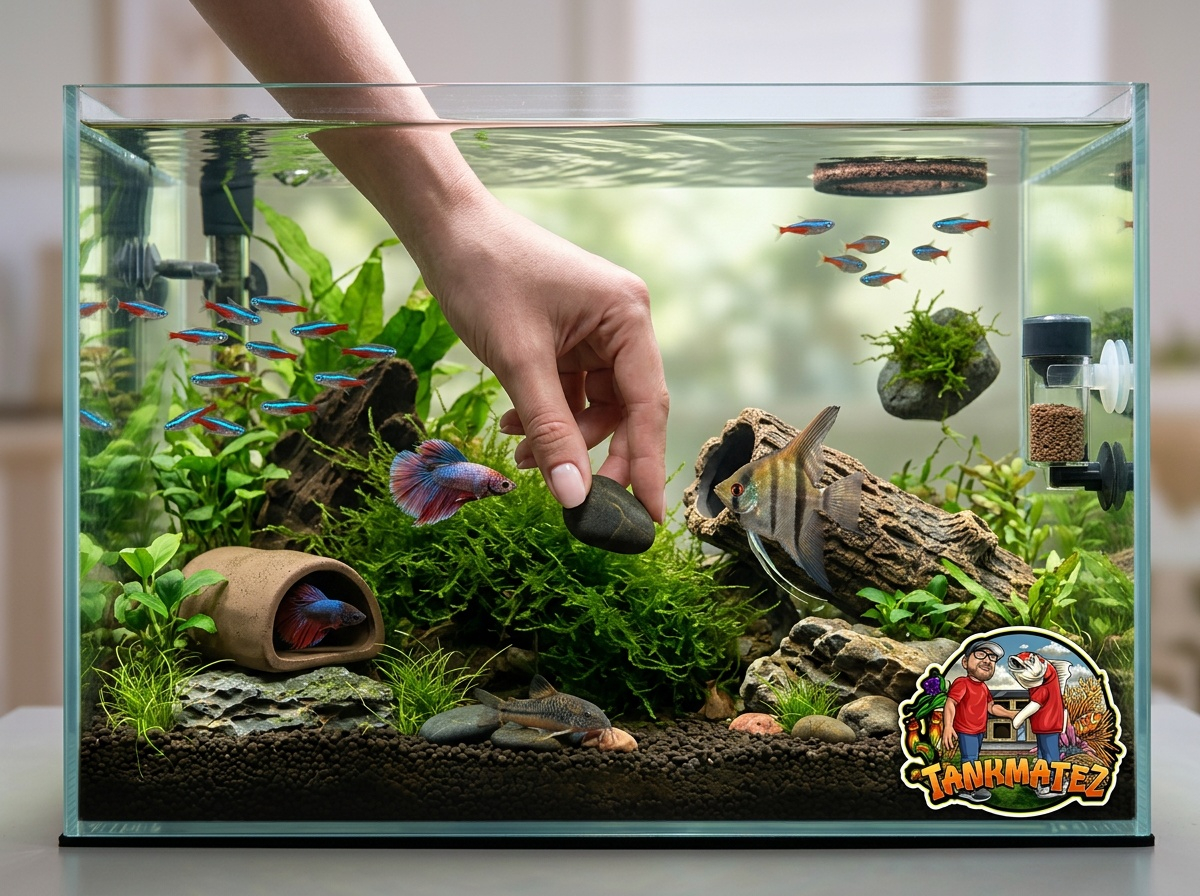
There is no schedule that works for every aquarium. A cautious starting point is to introduce or modify one feature at a time, then observe the fish for several days.
For example, you might:
- Rotate one removable decoration
- Shift a small, nonstructural rock
- Introduce a new feeding location
- Add a safe tunnel
- Adjust a controllable flow pattern slightly
- Place a familiar feeding device in a different safe position
Depending on the species, you might offer a small variation every one to four weeks. Some curious fish may investigate changes immediately. Shy or territorial fish may need much more time.
Novelty is only beneficial when the animal can cope with it. Constant disruption is not enrichment.
Should You Rearrange an Aquarium?
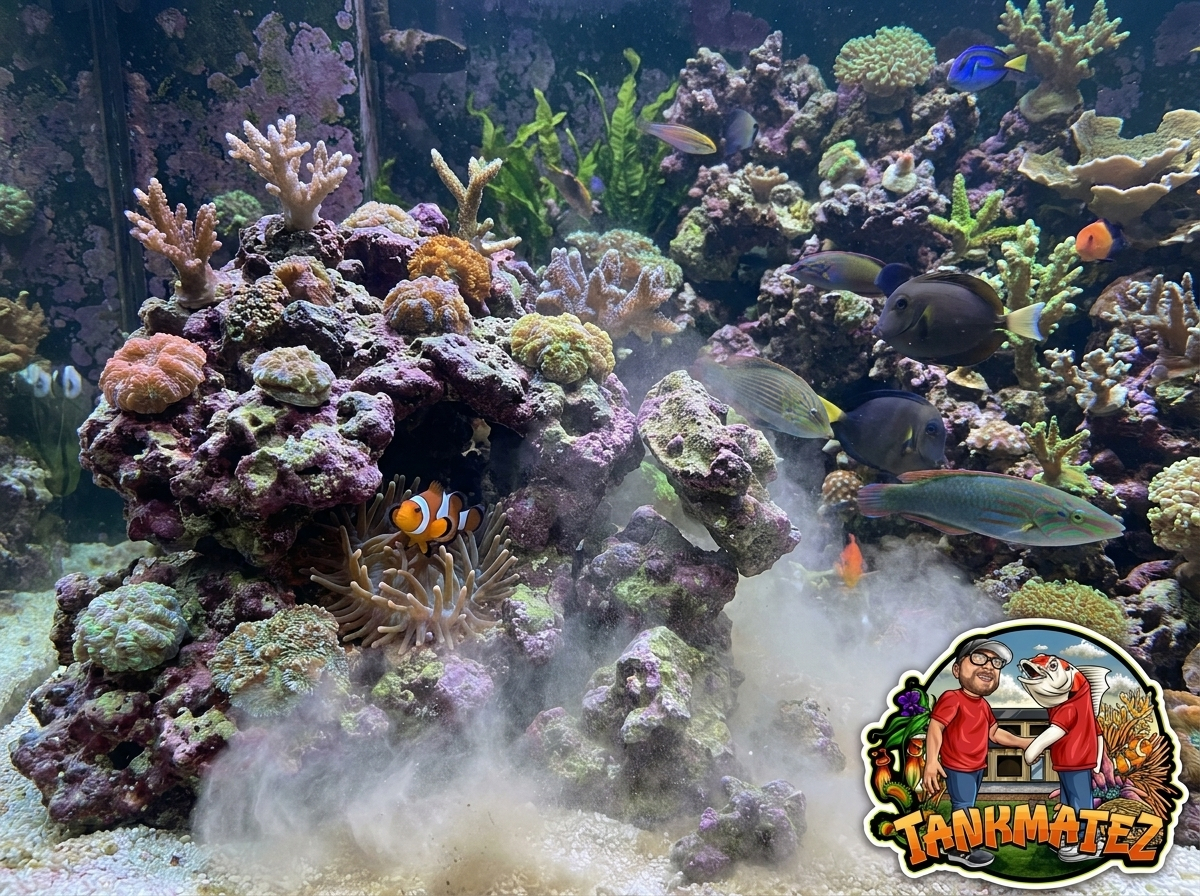
A small change can encourage exploration, but a complete redesign may erase established territories and hiding places. It may also disturb substrate, release trapped debris, damage plants or corals, or destabilize rockwork.
Before moving anything, ask:
- Is the structure supporting coral, equipment, or another rock?
- Could the change trap or injure a fish?
- Will digging disturb plant roots or release accumulated waste?
- Does a territorial fish rely on this cave?
- Will the new layout restrict swimming space?
- Can the object be cleaned and made aquarium-safe?
- Is there a smaller change that could provide the same benefit?
In reef aquariums, rockwork must remain secure. Never create a novelty that increases the risk of a rockslide or damages living coral.
Which Fish Benefit From Enrichment?
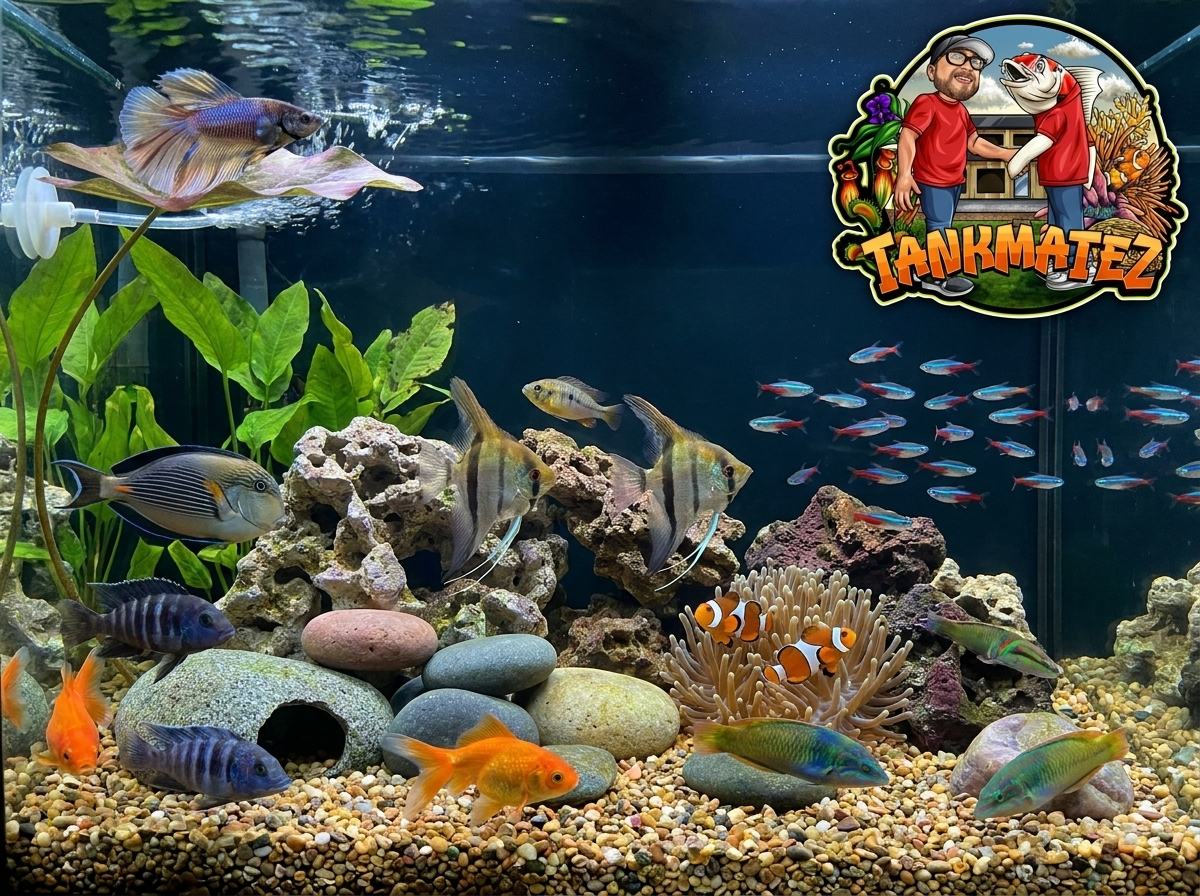
Potentially, any captive fish may benefit from opportunities to perform species-appropriate behavior. However, the best form of enrichment depends on how that fish lives in nature.
Bettas
Bettas may benefit from resting places near the surface, gentle flow, vegetation, sheltered areas, and supervised exploration. Avoid strong currents and prolonged mirror exposure.
Goldfish
Goldfish are active foragers. Open swimming space, suitable substrate, food-searching opportunities, and safe movable objects may encourage natural investigation. Any item must be too large to swallow and free from narrow openings.
Cichlids
Many cichlids dig, defend territories, move substrate, and investigate environmental changes. Caves and visual barriers can be useful, but rearranging territory may also trigger aggression. Observe carefully.
Tangs and Angelfish
These active reef fish may benefit from open swimming routes, grazing opportunities, varied food presentation, and complex but secure rockwork. Enrichment should never reduce the substantial swimming space these fish require.
Wrasses
Many wrasses naturally search rockwork or substrate for food. Species-appropriate substrate, secure caves, and foraging opportunities may be useful. Always research whether a particular wrasse buries itself and what substrate depth it requires.
Clownfish
Clownfish often maintain a preferred area or host. Gentle novelty near—but not directly disrupting—that territory may encourage investigation. Never force a clownfish to use an anemone or unfamiliar object.
Schooling Fish
Schooling and shoaling species need an appropriate group size, open swimming room, refuge, and widely accessible food. The structure should provide security without breaking the tank into cramped dead ends.
How Can You Tell Whether Enrichment Is Working?
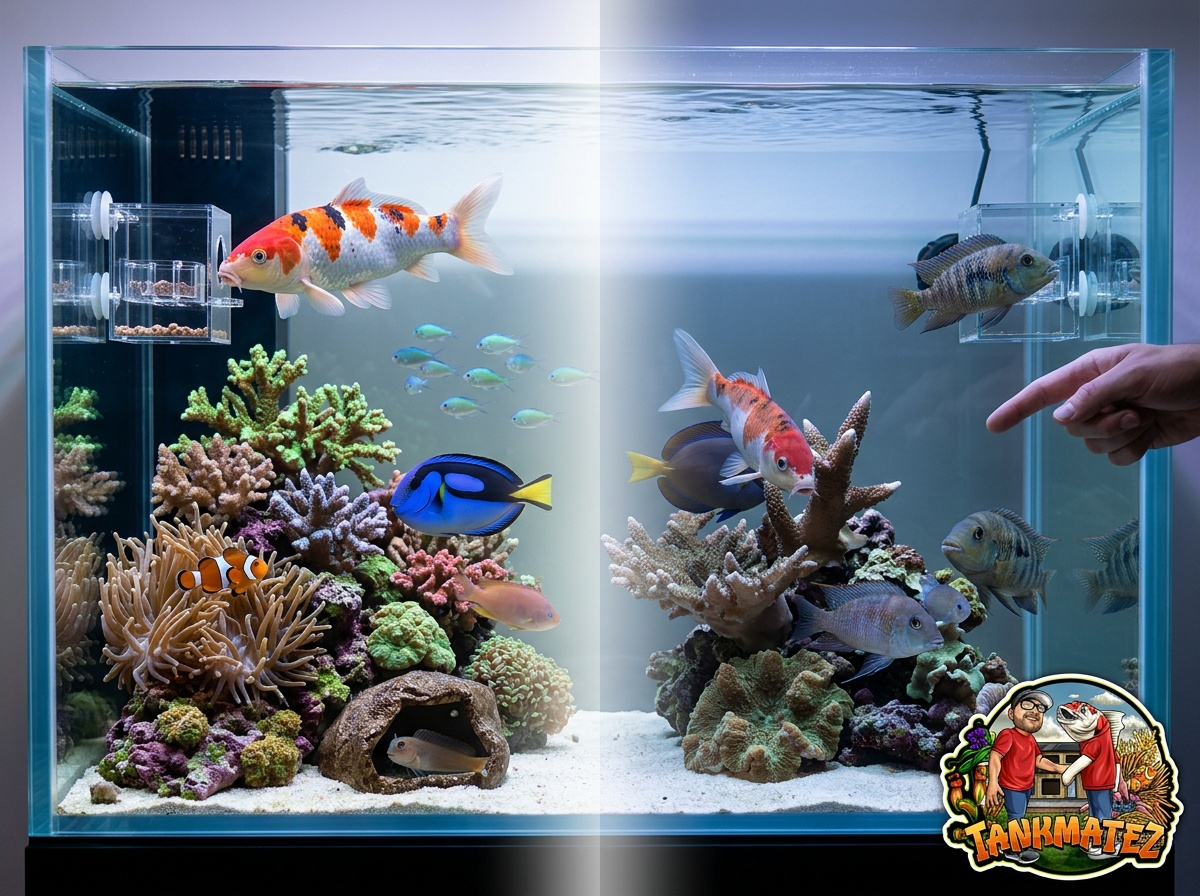
An enrichment item is useful only if it produces a safe, meaningful response.
Positive signs may include:
- Voluntary investigation
- Increased use of the aquarium
- Calm exploration
- Normal feeding
- Species-typical foraging
- Appropriate use of shelter
- Willing participation in training
- Returning to the enrichment voluntarily
Possible signs that the activity should be changed or removed include:
- Rapid breathing
- Persistent hiding
- Frantic swimming
- Repeated escape attempts
- Sudden loss of appetite
- Increased aggression
- Color changes associated with stress
- Physical contact with sharp or unsafe surfaces
- One fish preventing others from accessing food or shelter
Watch the entire aquarium community, not only the boldest fish. An object that engages one fish may intimidate another.
What Makes an Aquarium Enrichment Item Safe?
Before adding any object, confirm that it is suitable for aquarium use.
A safe enrichment item should be:
- Made from aquarium-safe, nontoxic material
- Free from sharp points and rough edges
- Large enough that it cannot be swallowed
- Free from openings that could trap the fish
- Stable or securely mounted
- Easy to inspect and clean
- Appropriate for freshwater or saltwater use
- Positioned away from heaters, pumps, and filter intakes
Do not place painted household objects, untreated metals, soap-contaminated materials, or unknown plastics in an aquarium. Natural rocks and wood can also affect water chemistry or introduce contaminants, so identify and prepare them correctly before use.
Can Fish Tank Enrichment Replace a Proper Aquarium Setup?
No. Enrichment is an addition to good fish care—not a substitute for it.
Before concentrating on enrichment, provide:
- An appropriately sized and cycled aquarium
- Stable, species-appropriate water parameters
- Reliable filtration and oxygenation
- A nutritious diet
- Appropriate temperature and lighting
- Secure shelter
- Compatible tank mates
- Preventive health observation
- Regular maintenance and water testing
A fish living in an undersized, overcrowded, or poorly maintained aquarium does not need a toy. It needs its essential environmental requirements corrected.
A Simple Fish Tank Enrichment Plan for Beginners
Not sure where to start? Try this gradual four-week approach.
Week 1: Observe
Spend several minutes each day watching your fish.
Record:
- Where each fish spends its time
- When it feeds
- Which shelters it uses
- Whether any fish guards a resource
- Any repetitive or unusual behavior
Week 2: Add One Small Structural Change
Add one safe cave, plant, tunnel, or removable feature. Do not disturb the entire aquascape.
Watch whether the fish approaches, avoids, or uses it.
Week 3: Change the Feeding Experience
Place part of the normal food ration in a different safe location or introduce a supervised feeding station.
A transparent device such as the TankMatez Bubble Fish Trap can encourage fish to explore a defined space for food while gradually becoming familiar with the equipment.
Week 4: Evaluate
Ask:
- Did the fish voluntarily engage?
- Did normal feeding continue?
- Did aggression change?
- Did shy fish still have secure retreats?
- Did the enrichment remain clean and safe?
- Should it stay, be modified, or be removed?
Repeat the process with small variations. Let the fish’s behavior guide the program.
Conclusion: A Healthy Aquarium Should Be Stable, but Not Lifeless
Successful fishkeeping begins with clean water, suitable nutrition, adequate space, compatible tank mates, and stable water chemistry. Once those foundations are in place, fish tank enrichment can create opportunities for exploration, foraging, learning, choice, and other natural behaviors.
You do not need to redesign your aquarium every week. Small, thoughtful changes are often enough. Rotate one safe feature. Introduce a new feeding location. Adjust a swimming route. Provide an additional shelter. Let your fish investigate a familiar feeding device.
Most importantly, observe the response.
The best enrichment is not necessarily the most complicated or expensive. It is the activity that safely encourages your fish to behave like a fish.
By treating an aquarium as a living environment rather than a static display, you can learn more about the animals in your care and make everyday fishkeeping more engaging for both you and your aquatic community.
Frequently Asked Questions About Fish Tank Enrichment
What is the easiest fish tank enrichment idea?
Start by changing how you present part of the fish’s normal food ration. Use a second feeding location, an appropriate grazing surface, or a supervised feeding station. This encourages investigation without requiring a major aquascape change.
How can I enrich a fish tank without adding clutter?
Change feeding locations, use brief target-training sessions, adjust controllable flow slightly, or rotate one removable feature. Enrichment does not require filling every open space.
Do fish like it when you change their tank?
Some fish readily explore small changes, while others become cautious or territorial. Change one feature at a time and preserve familiar shelter. The fish’s response matters more than the novelty itself.
Can I move aquarium decorations every week?
Weekly changes may be too frequent for some species. Start less often, especially with shy or territorial fish. Never move structures that support coral, plants, or unstable rockwork simply to create novelty.
Are floating toys safe for fish?
Only if they are designed for aquarium use and cannot be swallowed, chewed, trapped against equipment, or contaminated. Ordinary household or pet toys may contain unsafe dyes, metals, coatings, or small parts.
Can live plants provide enrichment?
Yes. Appropriate live plants can add shelter, texture, shade, visual barriers, and foraging surfaces. Choose plants that match the aquarium’s lighting, water chemistry, and inhabitants.
Can fish tank enrichment reduce aggression?
In some situations, shelters and visual barriers may reduce unwanted encounters. In other situations, a new cave or feeding station may become a resource that one fish guards. If aggression appears suddenly, evaluate stocking, space, sex ratios, territory, and resource distribution.
Can the Bubble Fish Trap be used when I am not catching a fish?
Yes. It can be introduced as a supervised feeding and exploration station so fish become familiar with entering it voluntarily. Follow the product instructions, select the proper trap size, and do not leave fish confined inside.
How do I train a fish to enter an aquarium fish trap?
Place the trap securely in the aquarium and allow the fish to investigate it. Add a small amount of its regular food inside. Repeat the process patiently without chasing or forcing the fish. Individual fish may require different amounts of time.
Is fish tank enrichment scientifically proven?
Research supports potential behavioral and welfare benefits from certain forms of enrichment, but results differ by species, life stage, environment, and enrichment method. That is why a species-specific, observation-based approach is essential.
What are some of the best products for fish tank enrichment and stimulation?
The best fish tank enrichment products encourage natural behaviors such as exploring, foraging, hiding, grazing, and problem-solving. Good options include:
- Caves, tunnels, and aquarium-safe rockwork for exploring, shelter, and territory building
- Live or artificial plants for cover, texture, and new swimming routes
- Feeding rings and grazing clips that make feeding more interactive
- Aquarium-safe floating objects for curious species that enjoy investigating movement
- Adjustable pumps and wavemakers for creating species-appropriate variations in water flow
- The TankMatez Magnetic Bubble Fish Trap, which can also serve as an interactive feeding and enrichment station. Placing food inside encourages fish to investigate and voluntarily enter the transparent chamber. This provides mental stimulation while helping fish become familiar with the trap before capture is ever necessary.
The best choice depends on your fish’s species, size, temperament, and natural habitat. Introduce one product at a time, supervise your fish’s response, and remove anything that causes fear, aggression, or physical danger.
Enrichment should support proper aquarium care, not replace clean water, suitable nutrition, adequate space, and compatible tank mates.
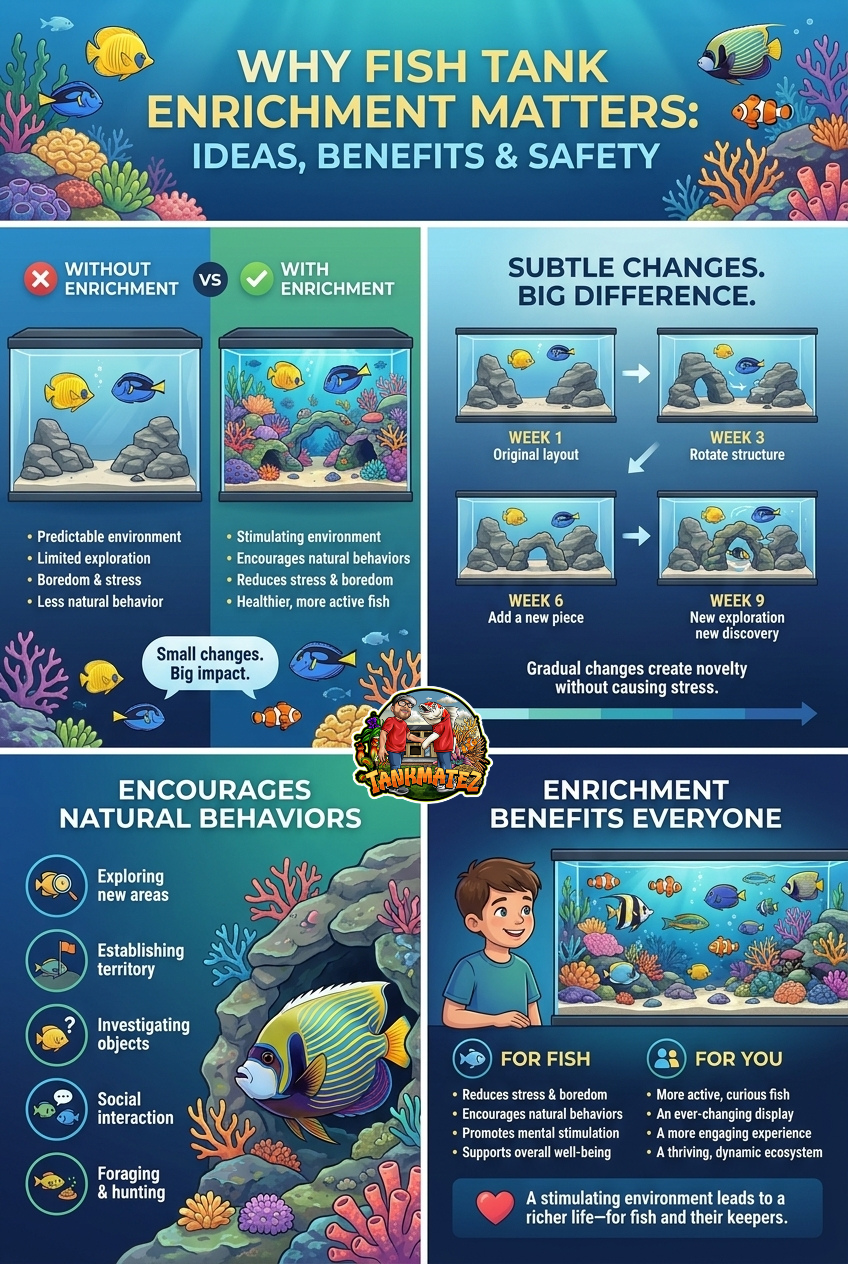

Turn Feeding Time Into Enrichment Time
Give your fish a safe new place to explore with the TankMatez Magnetic Bubble Fish Trap. Use it as an interactive feeding station to encourage curiosity and help your fish become comfortable entering the trap. Then, when you need to relocate or quarantine a fish, you can rely on its natural feeding behavior instead of chasing it through the aquarium with a net.
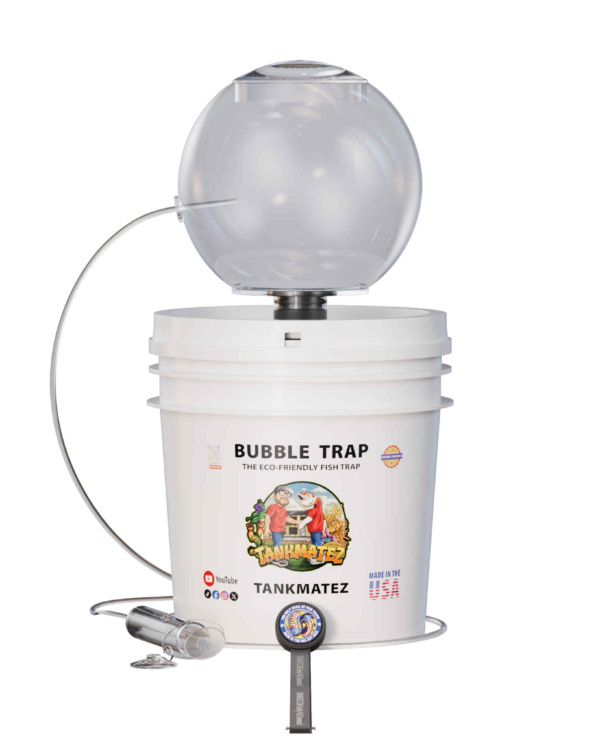
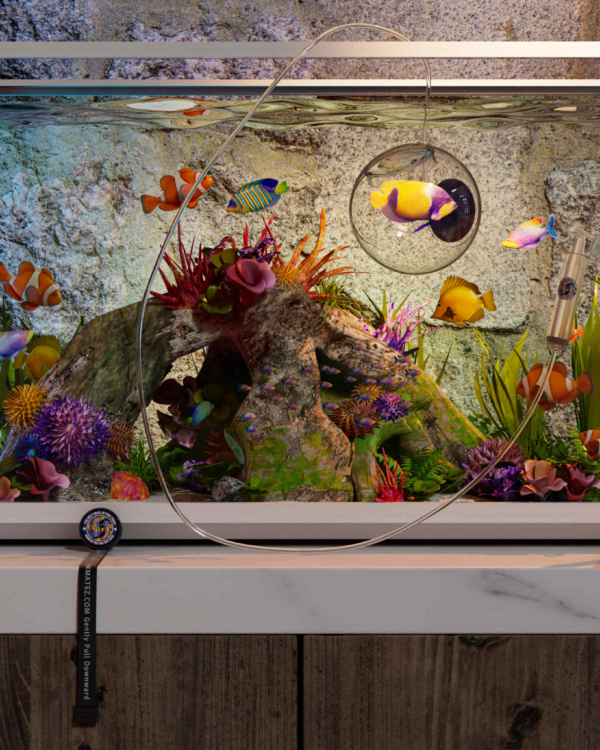
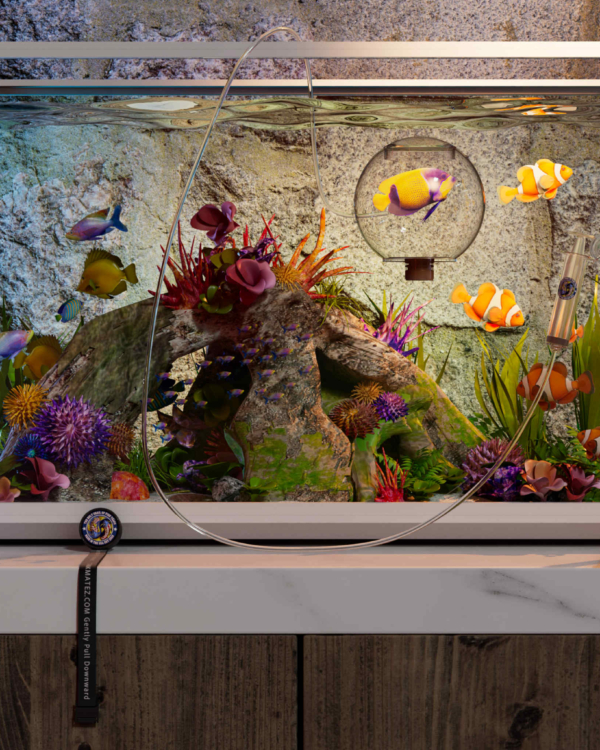


TankMatez Magnetic Bubble Fish Trap
The TankMatez Magnetic Bubble Fish Trap is an innovative solution for every aquarium hobbyist’s age-old problem – the challenge of catching fish with a net. Instead of the usual frantic chase, which often ends up causing undue stress for the fish and potential harm to corals, this device provides a smooth, anxiety-free method to ensnare your aquatic friends. Click Here to see the setup video.