The Ultimate Aquascaping Guide: Inspiring Tank Designs, Layout Principles, Plant & Coral Choices, and Fish Enrichment
Key Takeaways
- Aquascaping is more than decoration. A well-designed aquarium creates a natural environment that supports fish health, reduces stress, and encourages natural behaviors.
- Great aquascapes follow proven design principles. Using focal points, the rule of thirds, depth, balance, and negative space helps create layouts that look professional and visually striking.
- Choose a style that matches your vision. Dutch, Iwagumi, Nature Aquarium, Jungle, and Reef aquascaping styles each offer unique aesthetics and challenges.
- The right plants and corals make all the difference. Selecting species based on growth habits, lighting needs, and maintenance requirements creates a healthier and more sustainable aquarium.
- Always design with future growth in mind. Plants and corals expand over time, so leaving room for growth prevents overcrowding and preserves the beauty of your layout.
- Fish should be part of the design process. Aquascapes that include hiding places, territories, open swimming areas, and enrichment opportunities help fish feel secure and mentally stimulated.
- Environmental enrichment can improve fish cognition. Research suggests that complex, engaging environments encourage exploration, learning, and natural problem-solving behaviors in many fish species.
- Water flow, lighting, and maintenance matter as much as aesthetics. A beautiful aquascape should also support healthy circulation, proper plant or coral growth, and easy long-term upkeep.
- Creative hardscape choices create unforgettable displays. Rocks, driftwood, caves, arches, islands, and open valleys can transform an ordinary tank into a living underwater landscape.
- Successful aquascaping combines art, science, and patience. The most impressive aquariums evolve over time as plants mature, corals grow, and fish interact with their environment.
Introduction
Aquascaping is more than just decoration—it’s a blend of gardening, ecology, design, and animal welfare.
This guide was written to help you plan beautiful freshwater and saltwater aquascapes while keeping your fish healthy and mentally engaged.
Aquascaping Ideas: Complete Guide to Stunning Aquarium Designs ▼
What is Aquascaping and Why Does it Matter?
What does “aquascaping” actually mean?
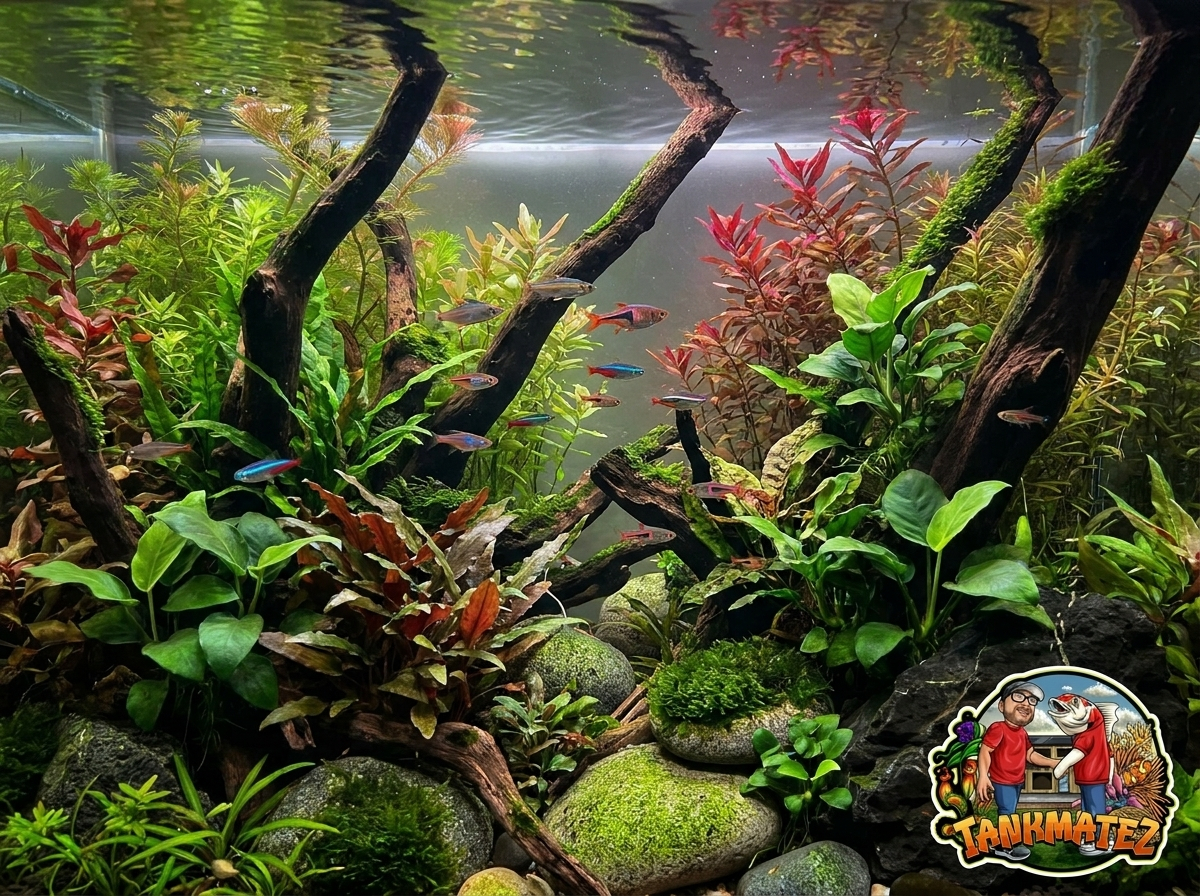
Aquascaping has been called “underwater gardening.” It involves arranging aquatic plants, stones, driftwood and other elements in a fish tank to create a scene that’s aesthetically pleasing.
Unlike simple fishkeeping, aquascaping marries artistic design with scientific understanding of plant physiology and aquarium ecology. It’s as much about fish and plant health as it is about beauty.
A well‑scaped tank becomes a living artwork that showcases your creativity and invites conversation.
Beyond aesthetics, aquascaping offers practical benefits.
Live plants filter water and absorb toxins, provide shelter and reduce stress for fish, and create a more natural habitat.
For reef tanks, carefully arranged rockwork supports coral growth and fosters good water flow.
In short, thoughtful aquascaping improves both your aquarium’s appearance and its inhabitants’ well‑being.
What Basic Principles Should Guide Your Aquascape?
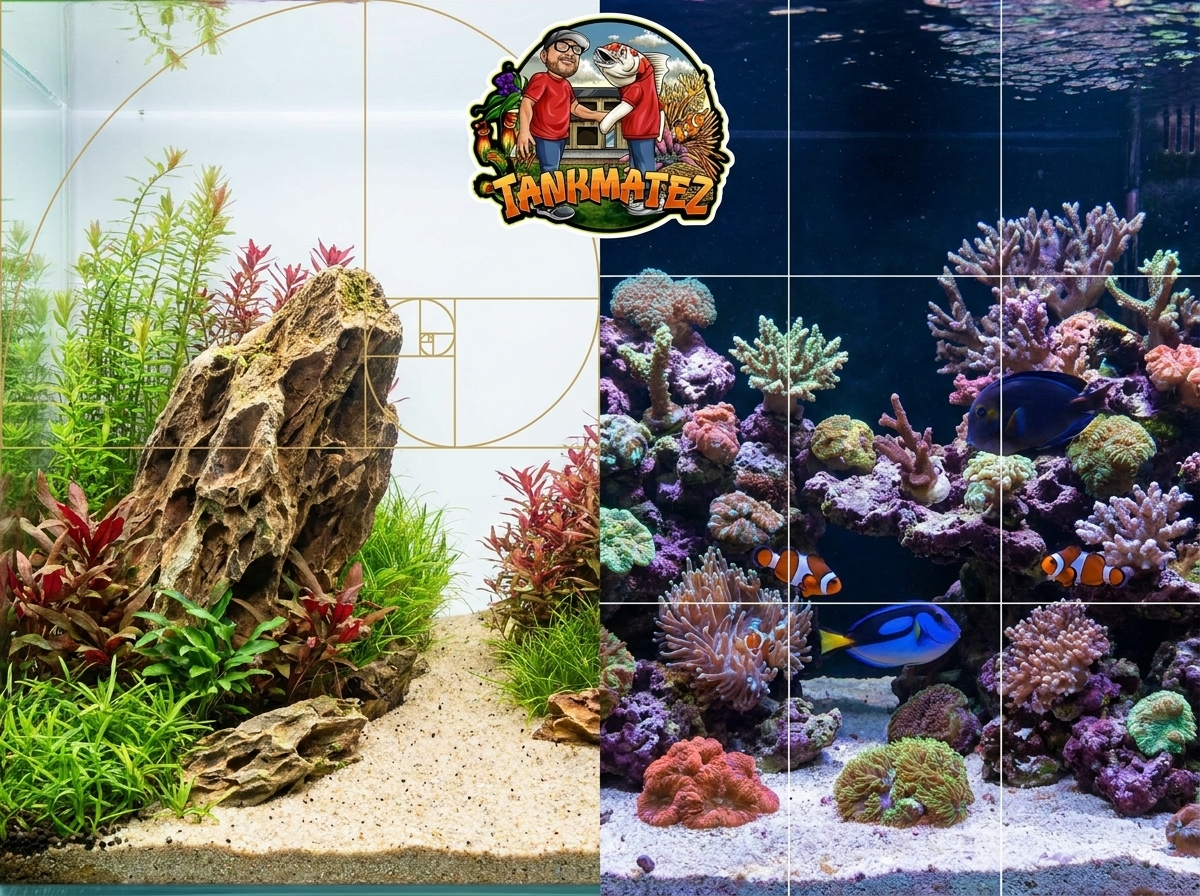
Simplicity, variety and proportion
When you’re designing your first aquascape, it’s tempting to cram in every plant or rock you see. Resist that urge—good layouts follow a few simple principles:
- Simplicity: Less is often more. Overcrowding the tank with many plant species can make it look chaotic. Start with a handful of species and let them shine.
- Variety: Simplicity doesn’t mean monotony. Use plants of different heights, textures and colors to avoid boredom.
- Proportion and open space: Balance filled and empty areas. Avoid using only large‑leaf plants because they dominate the view and remove depth. Negative space gives fish room to swim and enhances depth.
- Persistence: Be prepared to tweak and rebuild your layout. Aquascaping can be frustrating, and you may need to deconstruct and re‑arrange elements until you’re satisfied.
Balance, focal points and the rule of thirds
Aquascaping is like landscape painting—you want to lead the viewer’s eye.
Follow these guidelines:
- Balance: Consider the visual weight of rocks, plants and corals so that no side feels heavier than the other. Perfect symmetry can look unnatural; strive for equilibrium rather than mirror images.
- Focal points: Choose one or two spots where the viewer’s gaze should start. A striking rock, piece of driftwood or coral colony can act as the anchor. In large tanks you can create secondary focal points.
- Rule of thirds and golden ratio: Divide the tank into thirds or use the golden ratio (1:1.618) to place your focal point off‑center. This technique creates pleasing proportions and avoids placing your main feature in the exact center.
- Negative space: Leave open areas for fish to swim and corals to grow. Reef aquascapers often keep 30‑40% of the volume free so water flows freely and the tank doesn’t become a solid wall.
Plan for the future
Freshwater plants and corals grow. Design your layout with growth in mind. In reef tanks, the rock structure should be more open than you expect so corals have room to expand.
Create channels and gaps in rockwork to allow water circulation and prevent detritus build‑up.
When selecting rocks and wood, consider stability: place heavy pieces directly on glass, not on sand, to prevent shifting.
Which Aquascaping Style Fits Your Personality?
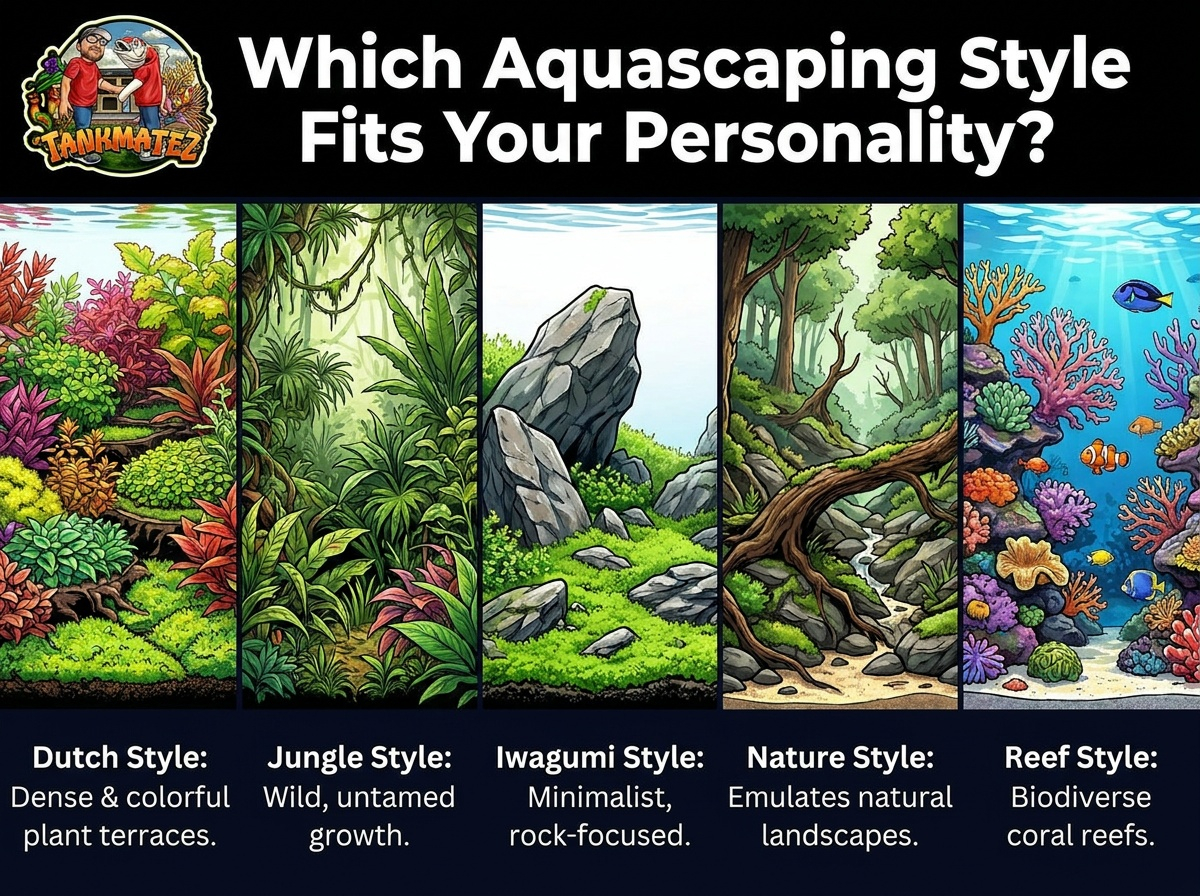
Dutch style
Do you enjoy the look of a well‑manicured garden? The Dutch style, popularized in the 1930s, focuses on dense and colorful plant arrangements. There’s no wood or stone; instead, plants of varying heights and colors are arranged in terraces or rows. It requires knowledge of many plant species but rewards you with a vibrant, garden‑like display.
Jungle style
Prefer a wild, untamed look? The Jungle style allows plants to grow freely, mimicking a natural jungle. Vegetation often becomes dense and requires minimal trimming. This style is simple to reproduce and favored by fish species that enjoy lush cover.
Iwagumi style
If you like minimalism and rocks, consider the Iwagumi style. Inspired by Japanese rock gardens, it uses carefully arranged stones with a single dominant “big Buddha” stone and smaller attending stones. Low‑growing carpeting plants emphasize the rocks’ shapes and create a serene landscape.
Nature aquarium style
Want to replicate a natural scene such as a forest, mountain or valley? Takashi Amano’s nature aquarium style combines hardscape and plants to create miniature landscapes. It’s less formal than Dutch style and encourages creativity in emulating terrestrial vistas.
Reef aquascaping
For saltwater tanks, the reef style showcases the biodiversity of coral reefs. Live rock is arranged to support coral growth and provide hiding places for fish. Open spaces maintain water flow and ensure corals get light and nutrients. Reef aquascapes often look sparse at first because empty space is reserved for corals to fill over time.
How Do You Design the Hardscape and Layout?
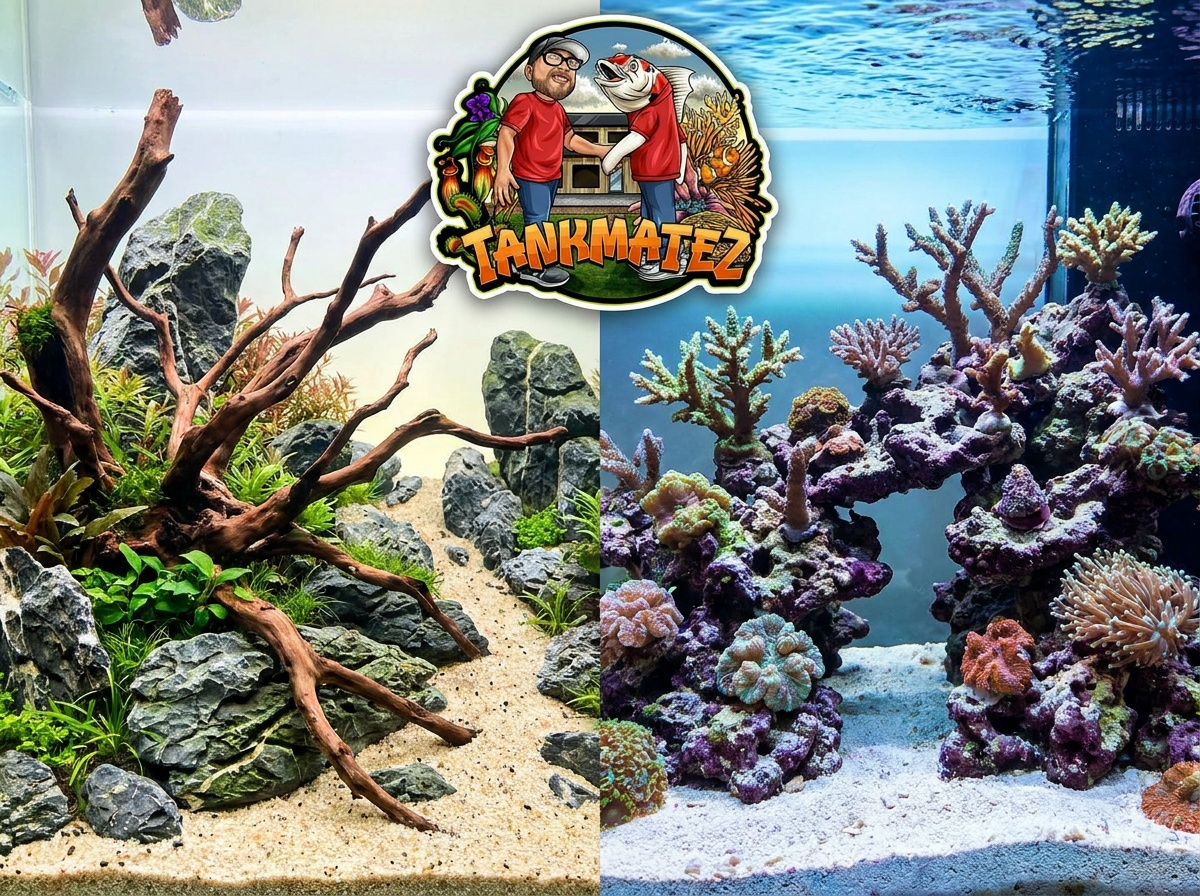
Choosing rocks, driftwood and substrate
The hardscape (rocks, driftwood, substrate) forms the skeleton of your aquascape.
Select rocks that complement your style: Seiryu stone suits Iwagumi layouts, while Dragon stone works well in natural scenes.
Driftwood adds natural elegance and can serve as a focal point. Substrate affects both aesthetics and plant health; sand or fine gravel is common for freshwater tanks, while crushed coral or aragonite benefits saltwater setups.
Arrange your hardscape to create depth. In freshwater tanks, use smaller stones and plants in the foreground and larger ones in the back to enhance perspective.
For reef tanks, plan two stages: rockscape first, coralscape later. The rock is the biological foundation, but the finished look comes from coral growth.
Layout tips for freshwater aquascapes
- Use triangular composition: Visual artists often use triangles to guide the eye. Arrange your hardscape in upside‑down, upright or side‑triangle shapes to create concave, convex or slope compositions. These layouts leave open valleys or islands for focal points and add dynamism.
- Create layers and islands: Building separate mounds or “islands” of plants and wood, surrounded by open sand, gives the tank depth and provides different habitats for fish.
- Consider water flow and lighting: Place equipment like filters or wavemakers to avoid dead spots, and ensure taller plants or rocks don’t shade shorter species.
Layout tips for reef aquascapes
- Define your objective: Decide whether your rock structure will be a sculpture or a canvas for coral.
- Apply the rule of thirds and leave negative space: Place high points off‑center and leave open water around structures. Open space creates depth and allows fish movement.
- Plan for coral growth: Provide space above and around rock to accommodate vertical and horizontal coral expansion. Keep rockwork low so branching corals have room to grow.
- Design for flow: Create channels behind and through the rock so water can circulate. Avoid solid walls and detritus traps.
- Leave maintenance access: Make sure you can clean glass, remove fallen corals and adjust flow; a beautiful reef is useless if you can’t maintain it.
What Plants Should You Choose for a Planted Tank?
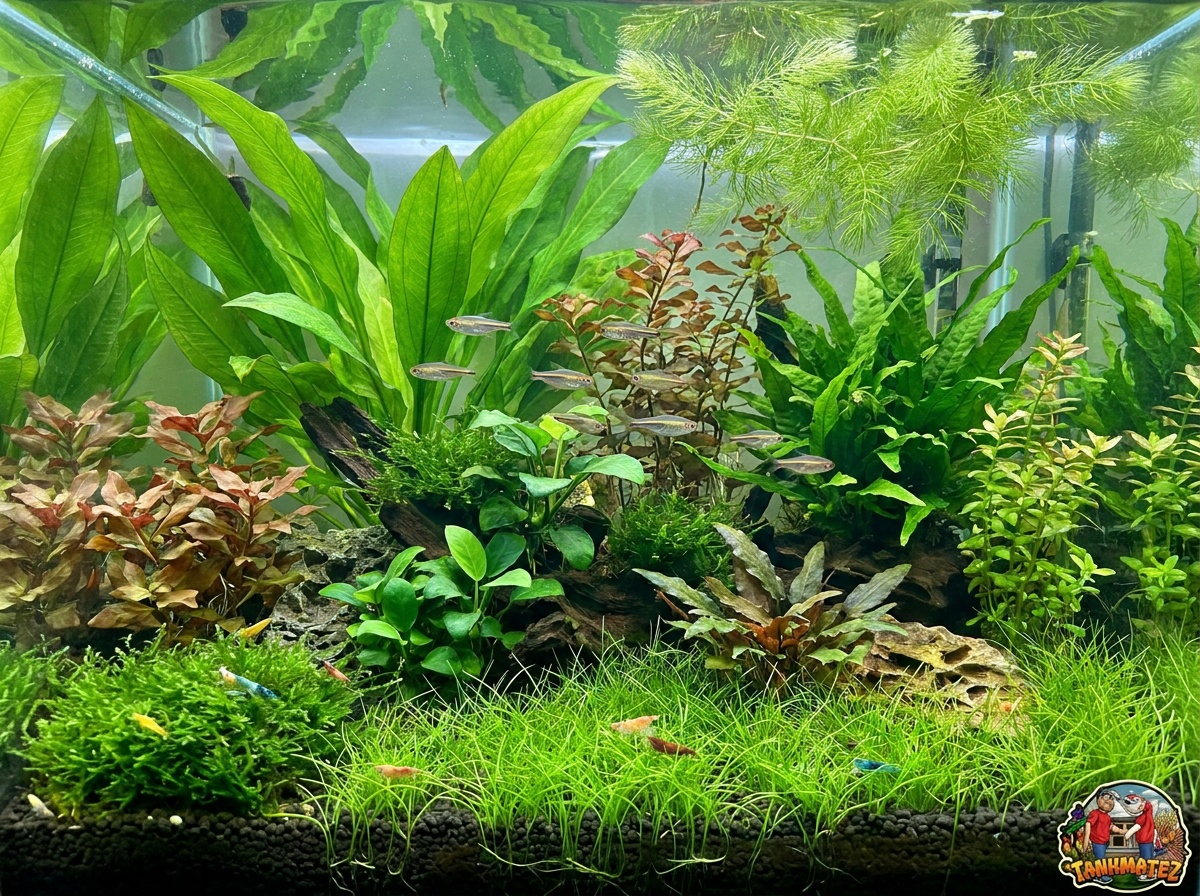
The benefits of live plants
Live plants are not just decoration; they act as biological filters by absorbing nitrates and ammonia, increasing dissolved oxygen through photosynthesis, and preventing algae growth. They also create habitat by offering hiding spots and territorial boundaries for fish, reduce stress, and mimic natural environments.
Strategically placed plants can serve as focal points and add texture.
Popular plant categories
Ferns: Aquarium ferns like Java fern, African water fern and Windelov fern can be attached to rocks or driftwood and prefer indirect light. Their versatility makes them perfect for midground accents.
Mosses: Mosses such as Java moss and Christmas moss grow in lush carpets and provide ideal hiding places for fry and small invertebrates. Trim moss regularly to maintain its shape and prevent it from overwhelming the scape.
Stem plants: Fast‑growing stems like Hygrophila, Ludwigia and Rotala offer diverse leaf shapes and colors. Trim and replant tops to encourage bushy growth and prevent shading of lower plants.
Top beginner plants
If you’re new to planted tanks, start with hardy species. The table below summarizes easy plants highlighted by Modern Aquarium and The Shrimp Farm articles.
| Plant | Key Features | Water Temp |
| Java Fern | Hardy, tolerates moderate light; attach to rocks or driftwood; grows in bunches | 72–84 °F (22–29 °C) |
| Amazon Sword | Large leaves hide equipment; good backdrop plant; propagates by runners | 72–84 °F (22–29 °C) |
| Dwarf Sagittaria | Low‑growing, forms green carpet; suitable for foreground and midground | 72–78 °F (22–26 °C) |
| Anubias Nana | Tolerates varied conditions; large leaves for decoration and fish protection | 70–82 °F (21–28 °C) |
| Java Moss | Nearly impossible to kill; used for carpeting, substrate stabilization and breeding | 72–90 °F (22–32 °C) |
| Dwarf Hairgrass | Easy carpeting plant; contrasts nicely with dark substrate; trim regularly | 72–78 °F (22–26 °C) |
| Ludwigia | Adds red or brown color; plant in groups for impact; requires good light and fertilization | 72–82 °F (22–28 °C) |
| Hornwort | Fast‑growing, rootless plant; absorbs excess nutrients and reduces algal blooms | 59–86 °F (15–30 °C) |
These plants offer a forgiving starting point and allow you to focus on layout and fish care rather than constant plant maintenance.
Mix different textures—broad leaves, fine leaves and carpets for visual interest.
How do you Create a Reef Aquascape and Choose Corals?
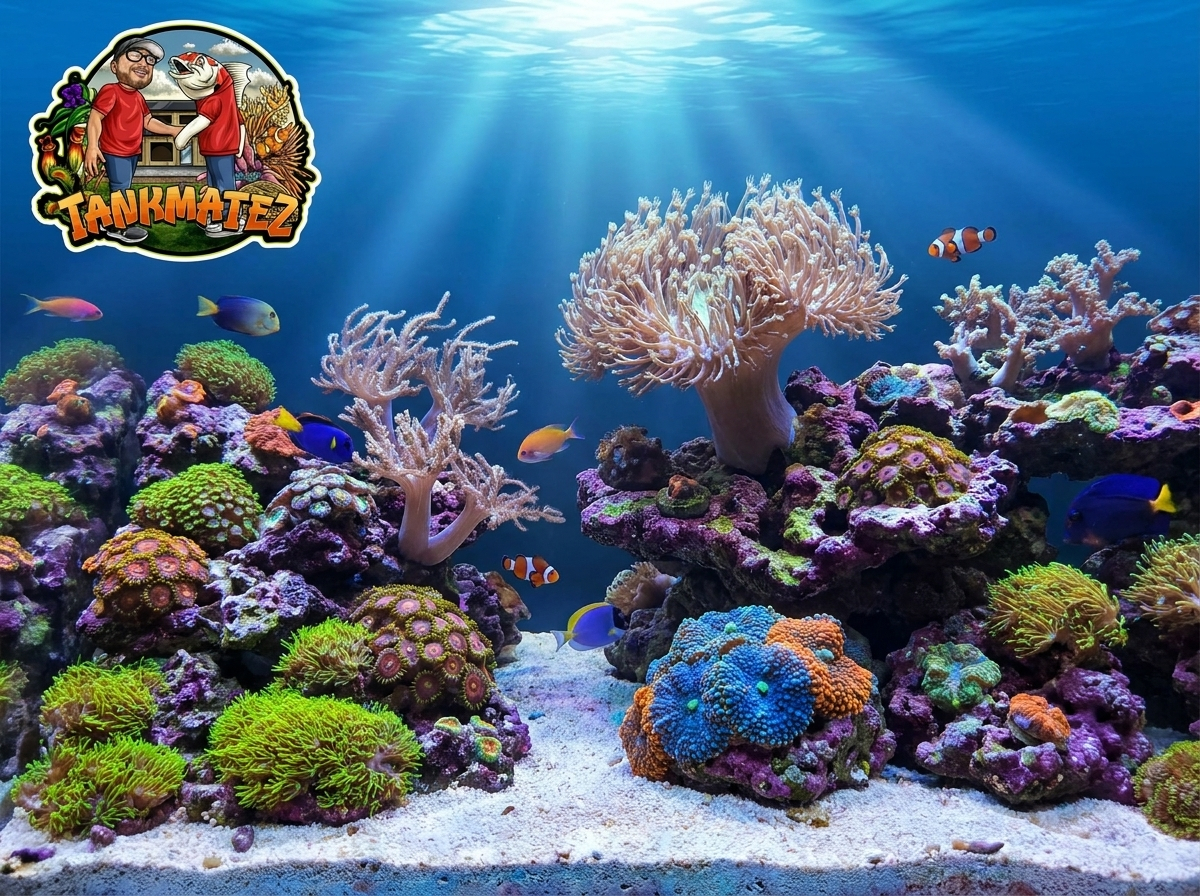
Designing a reef tank involves planning for coral growth, water flow and lighting.
Reef layout principles
- Start with your rockscape: Build a stable base and decide on your long‑term concept: shallow lagoon, coral bommie or reef slope. Remember that the rock is not the final focal point; corals will take center stage later.
- Use negative space and asymmetry: Leave open sand and water between structures; this gives corals room to grow, improves flow and provides fish with swimming space.
- Plan for flow: Channels and gaps behind and between rocks help water circulate and prevent dead spots. Test flow before adding corals.
- Consider light zones: Build tiers at different heights so you can place corals with varying light requirements. Leave vertical space above the rock for upward growth.
- Think about maintenance: Ensure you can reach all areas to clean and reposition corals.
Beginner‑friendly corals
Soft corals are ideal for newcomers because they are hardy, adaptable and require less precise water parameters. They also move with the current, adding dynamic motion to your reef. Some easy species include:
| Coral | Appearance & Care | Notes |
| Zoanthids (Zoas) | Small button‑like polyps; moderate light; low–medium flow; very fast growth | Can quickly cover rocks—place cautiously to avoid overrunning other corals. |
| Green Star Polyps (GSP) | Bright green, grass‑like polyps on a purple mat; low–moderate light; medium–high flow | Extremely hardy; may overgrow neighbors if not isolated. |
| Ricordea Mushroom | Dome‑shaped coral with bubble‑like surface in vivid colors; low–moderate light and flow | Easy to propagate and provides a splash of color. |
| Kenya Tree Coral | Tree‑like with flexible branches; low light; moderate flow | Tolerant of water fluctuations and sheds periodically to regenerate. |
| Toadstool Leather Coral | Mushroom‑like cap with tentacle polyps; moderate–high light | Adds movement and grows into striking shapes. |
These species tolerate a range of conditions, making them suitable for small or mixed‑reef tanks. Always leave space between coral colonies to prevent aggressive species from stinging neighbors and to accommodate growth.
How does Aquascaping Relate to Fish Intelligence and Welfare?
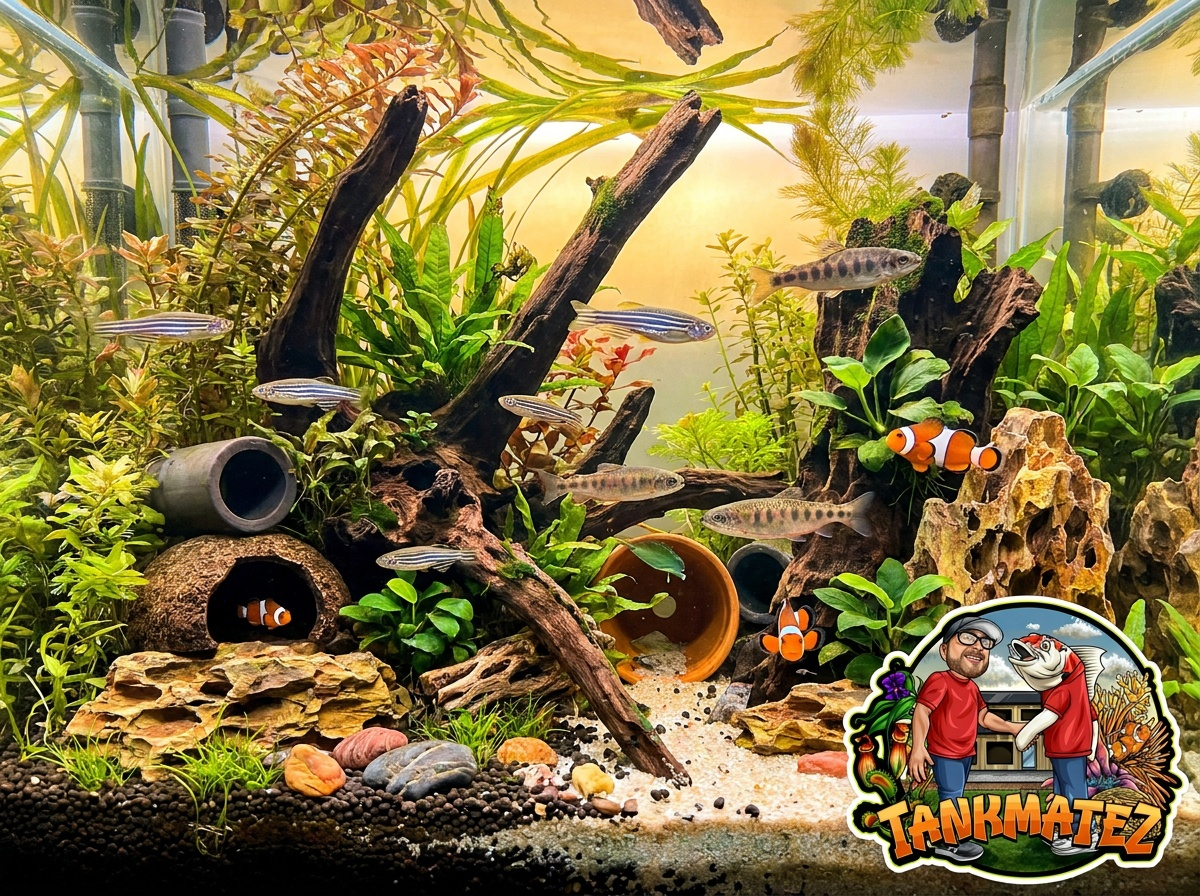
Fish are curious and capable
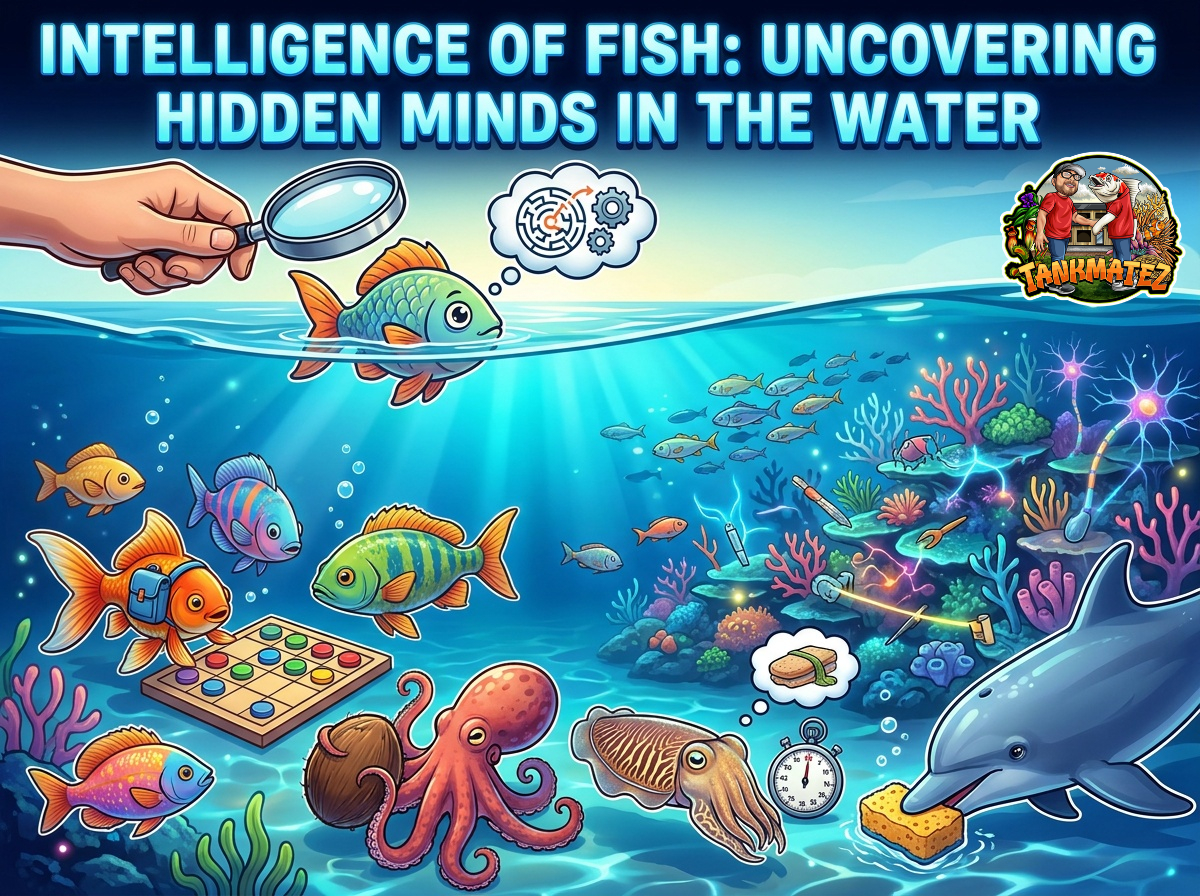
Fish are often perceived as passive, but research shows they possess behavioral complexity and cognitive abilities. They can suffer or experience pleasure and show individual temperaments.
Laboratory studies reveal that fish housed in barren tanks can become chronically bored and cognitively stunted.
A rising tide of research suggests that stimulating environments improve fish welfare and even scientific outcomes. For example, zebrafish raised with plants, shelters and novel objects developed bigger brains and navigated mazes better than those from empty tanks. Even adding a few stones can enlarge the cerebellum of juvenile salmon.
Enrichment enhances brain function
Environmental enrichment not only improves behavior but also boosts neural plasticity.
In a study on juvenile Atlantic salmon, fish reared in enriched tanks (with cobbles, artificial plants and varied substrates) showed upregulated expression of NeuroD1, a gene associated with brain growth, and performed better on spatial learning tasks.
Enrichment encourages adaptive behaviors and increases survival when fish are released into natural environments.
Providing choice, hiding places, varied textures and opportunities for exploration fosters behavioral diversity and agency, key indicators of positive welfare.
Practical ways to enrich your tank
- Provide shelter and shade: Use plants, driftwood, rocks and tubes to create hiding spots. Shade screens mimic overhanging vegetation and reduce stress.
- Add variety and novelty: Rearrange decor occasionally and introduce safe objects like floating toys or feeding puzzles to encourage exploration.
- Encourage natural behavior: Choose species‑appropriate substrates (sand for bottom feeders), provide open swimming areas and supply live foods when possible.
- Train your fish: Basic target training or feeding routines provide mental stimulation and allow fish to exercise choice.
When designing your aquascape, think of it as an enrichment device. A varied, thoughtfully arranged environment can bring out your fish’s natural intelligence and reduce stress. It also makes the tank more interesting to watch!
Creative Inspiration: Unique Aquascape Ideas
- Nature snapshots: Replicate a mountain ridge, riverbank or forest floor. Use rocks and wood to mimic cliffs and roots; plant carpets to represent meadows.
- Island valleys: Create isolated “islands” of rock and plants separated by sand. This adds depth and allows you to showcase different plant species or coral types.
- Bonsai trees and roots: Attach mosses to driftwood shaped like miniature trees for a whimsical effect.
- Biotopes: Design your tank around a specific ecosystem: Amazonian blackwater, African savannah ponds, mangrove roots or Indo‑Pacific reefs. Research plants, fish and decor from that habitat to create an authentic environment.
- Contrast and color: Combine red plants like Ludwigia with green carpets or pair brightly colored corals with neutral rock to create visual focus. Use color zones rather than scattering every hue everywhere.
Common Mistakes and How to Avoid Them
- Overcrowding: Too many plants, rocks or corals make maintenance difficult and limit water flow. Remember to leave negative space.
- Ignoring growth: Plants and corals grow! Plan for future size and avoid placing colonies too close together.
- Neglecting water flow: Poor circulation leads to detritus build‑up and algae. Design channels and avoid solid walls.
- Centering everything: Placing your main feature in the middle creates a static composition. Use the rule of thirds.
- Not researching fish compatibility: Certain fish may uproot plants or nip corals. Choose fish that fit your chosen style and environment.
- Skipping maintenance: Detritus, algae and overgrown plants will spoil even the most artful layout. Plan for access and routine upkeep.
Conclusion
Aquascaping is a rewarding blend of art and science.
By understanding design principles, choosing the right plants or corals, and planning for your animals’ needs, you can create a tank that is beautiful, balanced and enriching for its inhabitants.
Use simplicity, variety and proportion to guide your layout; select hardy beginner plants and soft corals if you’re new; and remember that enrichment isn’t a luxury—it’s essential for fish welfare and cognitive health.
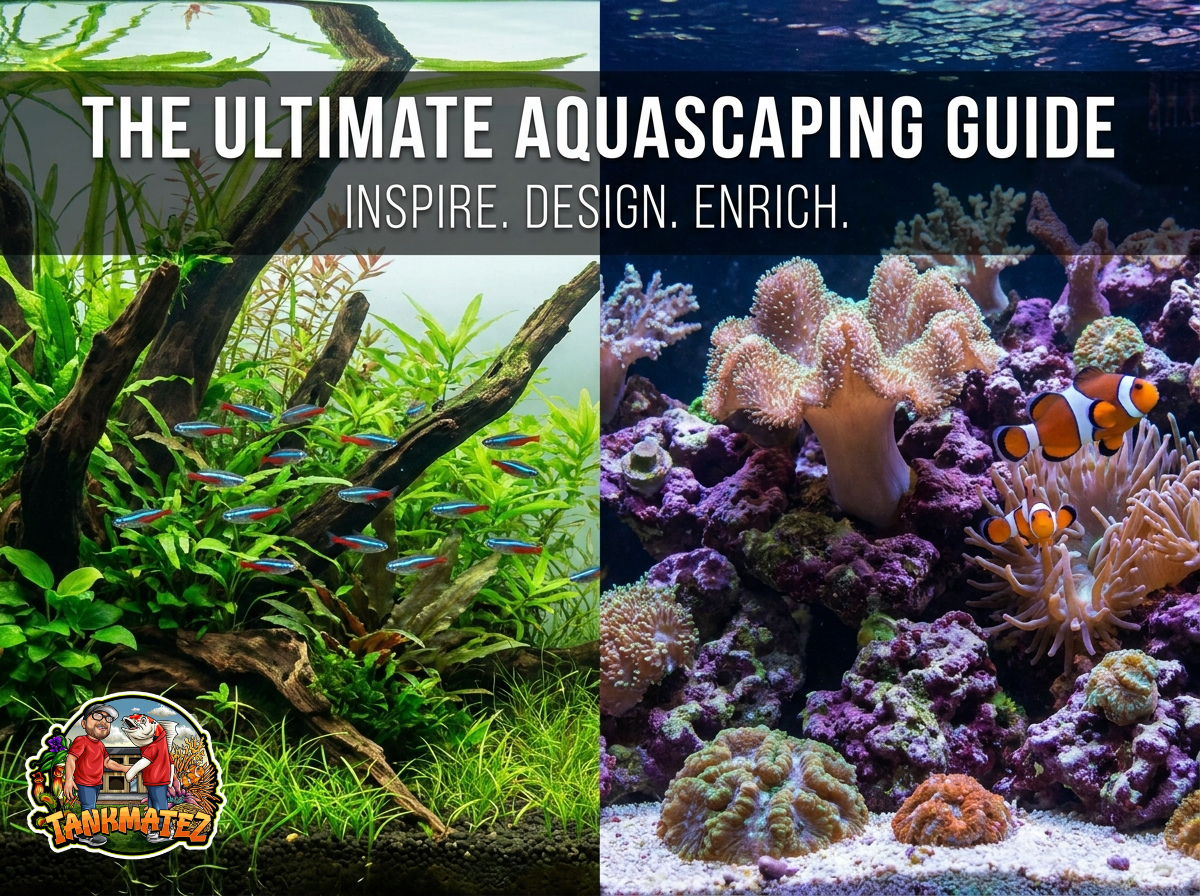
Whether you dream of a lush Dutch garden, a minimalist Iwagumi rockscape or a thriving reef, let your creativity flow and enjoy the process of building a living landscape. Your fish and your friends at tankmatez.com will thank you.
What are some aquascaping ideas?
Popular aquascaping ideas include nature-inspired landscapes, minimalist Iwagumi rock layouts, lush Dutch-style planted tanks, jungle aquascapes, island formations, bonsai driftwood designs, riverbed recreations, and open reef structures for coral growth. The best design often reflects the natural behaviors and needs of the aquarium’s inhabitants.
How to choose lighting systems for aquascaping setups?
Choose lighting based on the needs of your plants or corals, tank depth, and desired growth rate. Low-light aquascapes can thrive with basic LED fixtures, while demanding carpeting plants and reef corals typically require higher-intensity, full-spectrum lighting. Look for adjustable brightness, programmable schedules, and energy-efficient LEDs for the best long-term results.
What are the essential tools for aquascape maintenance?
Essential aquascaping tools include aquascaping scissors for trimming plants, long tweezers for planting and repositioning decorations, an algae scraper or magnetic cleaner for glass maintenance, a gravel vacuum for debris removal, pruning tools, a water testing kit, and a reliable siphon for water changes.
How to prevent algae outbreaks in a newly set up aquascape?
To prevent algae in a new aquascape, avoid overfeeding, limit lighting to 6–8 hours per day initially, perform regular water changes, maintain proper filtration, and add fast-growing plants to absorb excess nutrients. Consistent maintenance, stable water parameters, and patience during the tank’s maturation period are the most effective ways to keep algae under control.

Transform Your Aquascape Without Tearing Apart Your Aquarium
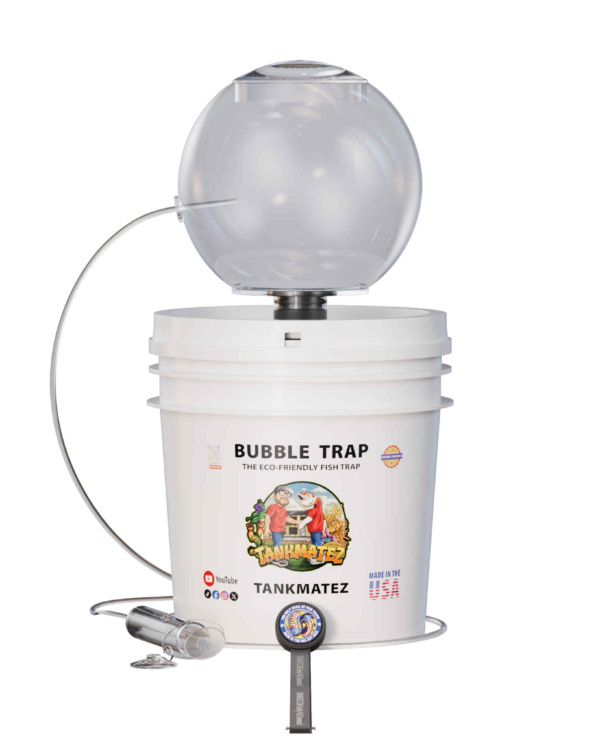
Creating a beautiful aquascape is only half the challenge—maintaining it is where the right tools make all the difference. Whether you’re rearranging plants, redesigning rockwork, introducing new fish, or moving aquarium inhabitants safely, the TankMatez Bubble Fish Trap helps you catch fish with less stress, less chasing, and less disruption to your carefully crafted underwater masterpiece.
Protect your aquascape, reduce stress on your fish, and make aquarium maintenance easier with the TankMatez Bubble Fish Trap. Order yours today and experience a smarter way to manage your aquarium.
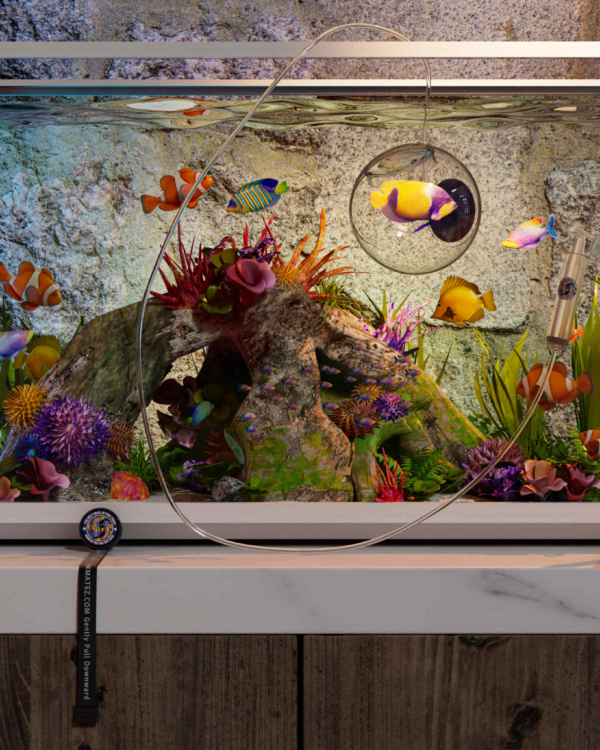
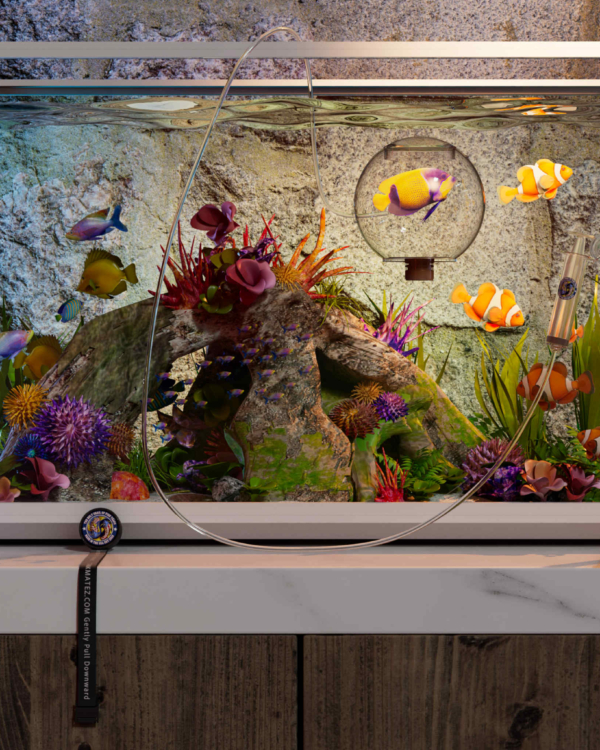


TankMatez Magnetic Bubble Fish Trap
The TankMatez Magnetic Bubble Fish Trap is an innovative solution for every aquarium hobbyist’s age-old problem – the challenge of catching fish with a net. Instead of the usual frantic chase, which often ends up causing undue stress for the fish and potential harm to corals, this device provides a smooth, anxiety-free method to ensnare your aquatic friends. Click Here to see the setup video.